Category: Uncategorized

  • Best Payment Gateways for Peptide Businesses in 2026

    Best Payment Gateways for Peptide Businesses in 2026

    Finding the right payment gateway for a peptide business is rarely as simple as signing up with a mainstream provider and going live. Many peptide merchants run into stricter reviews, slower approvals, reserve requirements, or outright rejections, especially when selling across borders or using a business model that payment providers consider higher risk.

    That is why the best payment gateways for peptide businesses are not just the cheapest or the fastest to install. They are the ones that can support risk review, stable processing, strong approval logic, and the payment methods your customers actually want to use.

    For peptide merchants selling globally, and especially those focused on the UK and EU, choosing the right provider can affect approval rates, customer trust, settlement reliability, and long-term growth.

    Why peptide businesses often face payment friction

    Peptide businesses are not all treated the same, but many are reviewed more carefully than standard eCommerce stores. That usually happens because payment providers look at product category, refund risk, regulatory sensitivity, cross-border exposure, and the overall risk profile of the merchant.

    A provider may also look closely at:

    • product claims on the website
    • business documentation
    • fulfillment model
    • countries served
    • chargeback exposure
    • sales model, including subscriptions or repeat billing

    This is one reason many merchants start with the wrong provider, get delayed, and only later realize they need a more suitable high-risk payment gateway setup.

    What the Best Payment Gateways for Peptide Businesses Should Offer

    The best payment gateways for peptide businesses usually have more than a checkout page and card processing. They need to support the realities of a business that may face more underwriting scrutiny than a typical online store.

    In practice, the best payment gateways for peptide businesses are the ones that can support approvals, international sales, and long-term payment stability.

    Here is what matters most.

    1. Clear underwriting for higher-risk merchants

    A peptide merchant should not have to guess whether the provider can actually support the business model. The best option is a gateway and processing setup with underwriting that understands higher-risk categories and can evaluate the business properly from the start.

    This is where many merchants benefit from reviewing a high-risk payment gateway onboarding checklist before applying. Getting documents, policies, and business details ready early can reduce avoidable delays.

    2. Strong approval logic and routing flexibility

    A good payment setup should help merchants improve transaction performance, not just process payments in the background. Approval rates matter, especially for merchants with international traffic, mixed card quality, or different issuing regions.

    For peptide businesses selling into the UK, the EU, and beyond, routing logic can make a real difference. A transaction that fails in one route may perform better through another setup, depending on geography, risk checks, and issuer behavior.

    3. Support for international sales

    Many peptide businesses are not limited to one domestic market. They sell cross-border, accept customers from different regions, and need a setup that can handle international cards and multiple customer payment preferences.

    That is why a peptide merchant should look closely at:

    • supported countries
    • settlement structure
    • multi-currency support
    • cross-border acceptance
    • local payment preferences where relevant

    This matters even more for businesses targeting both UK and EU customers, where checkout expectations and issuing environments can vary.

    4. Risk management tools that help protect revenue

    Payment approval is only one part of the picture. Long-term payment stability also depends on fraud controls, refund management, and chargeback prevention.

    For peptide businesses, the best gateway is not simply the one that accepts transactions today. It is the one that helps reduce avoidable losses and keeps the account healthier over time. That is why it helps to connect payment decisions with a practical chargeback reduction strategy rather than treat them as separate issues.

    5. Transparent reserve and settlement terms

    Some peptide merchants are surprised when they are approved but later discover rolling reserves, delayed payouts, or tighter settlement conditions than expected. That is why it is important to ask about reserve structure before going live.

    If a provider uses reserves, the key question is not only whether one exists, but whether the terms are clearly explained and commercially manageable. Understanding rolling reserves for high-risk merchants is important before signing anything.

    Common approval blockers peptide merchants should watch for

    Even good businesses can run into avoidable approval problems if the application is incomplete or the website creates risk concerns.

    Some common blockers include:

    • missing company documents
    • unclear terms and conditions
    • weak refund policy presentation
    • unsupported sales regions
    • vague product descriptions
    • inconsistent business information between the website and application
    • compliance concerns related to product positioning

    This is why merchants often search for ways to get high-risk payment gateway approval faster. In many cases, the real fix is not speed alone. It is submitting the right information in a cleaner and more review-ready format.

    Payment methods peptide businesses should consider

    Cards are still central for most peptide merchants, but relying on one method alone can create unnecessary weakness. The best payment gateways for peptide businesses often support a broader approach, depending on region, business model, and risk appetite.

    That can include:

    • major card payments
    • alternative payment methods
    • bank-based options where suitable
    • crypto-friendly flows when aligned with the business model and target markets

    The right mix depends on who you sell to, where you sell, and how your customers prefer to pay. A merchant focused on UK and EU growth may need a different checkout approach from one selling primarily in other regions.

    How peptide businesses should evaluate a provider in 2026

    Before choosing a gateway, peptide merchants should ask practical questions, not just compare headline fees.

    A better evaluation framework looks like this:

    Can this provider support my business category?

    Do not assume. Confirm it directly.

    Can they support UK, EU, and global sales?

    This matters for expansion, approval logic, and checkout performance.

    What documents will I need?

    A weak application slows everything down.

    What are the reserve, settlement, and risk terms?

    You need clarity before launch, not after.

    What fraud and chargeback controls are available?

    A payment setup should help protect revenue, not just collect it.

    Is the provider built for higher-risk merchants?

    This is often the difference between a short-term workaround and a stable long-term payment setup.

    Premium peptide bottles and packaging for peptide businesses

    Where Niftipay fits for peptide businesses

    For peptide businesses that need a more suitable payment setup, Niftipay is built to support merchants operating in categories that mainstream providers often review more strictly.

    That matters for businesses looking for:

    • a payment setup aligned with higher-risk merchant needs
    • better support during approval
    • infrastructure suited to international growth
    • a more realistic path for merchants selling into the UK, EU, and global markets

    Instead of forcing peptide businesses into a one-size-fits-all model, the right setup should reflect the actual business profile, target markets, and operational risks involved.

    Choosing the Right Payment Setup for Long-Term Growth

    The best payment gateway for a peptide business is not the one with the broadest consumer brand recognition. It is the one that can actually support the merchant, handle the business model properly, and provide a payment structure that works as the company grows.

    For businesses selling peptides across the UK, the EU, and international markets, that means looking beyond surface-level features and focusing on approval fit, routing strength, risk controls, and payment flexibility.

    For many merchants, choosing between the best payment gateways for peptide businesses is really about finding the provider that matches their risk profile, markets, and growth plans.

    If you run a peptide business and need a payment gateway that can support higher-risk processing with a global outlook, contact Niftipay to discuss your business model, target markets, and payment requirements.


  • High-Risk Payment Gateway for Nutraceutical and Supplement Brands in the UK and EU

    High-Risk Payment Gateway for Nutraceutical and Supplement Brands in the UK and EU

    High-risk payment gateway for supplement brands is often a necessary starting point for businesses selling in the UK and EU. Many supplement merchants face more payment friction than standard ecommerce stores, even when the business is legitimate and operationally sound.

    That is why choosing the right payment setup matters early.

    If you are looking for a high-risk payment gateway for supplement brands, the goal is not just to accept payments. The goal is to get a setup that supports approval, protects checkout stability, and gives your business room to grow without constant processing disruption.

    For higher-scrutiny categories, Niftipay is built to be a more practical option for businesses that need a high-risk payment gateway with a smoother path from onboarding to live processing.

    Why nutraceutical and supplement brands are often treated as higher risk

    Not every supplement brand is treated the same way, but many fall into a category that payment providers review more closely.

    This usually happens when a business has one or more of the following:

    • subscription or repeat billing models
    • cross-border sales across multiple markets
    • elevated refund or dispute exposure
    • aggressive marketing language or product claims
    • longer delivery windows
    • restricted or closely monitored product categories

    In the UK and EU, there is an extra layer of complexity because brands may sell across borders, process different customer profiles, and operate under different commercial and compliance expectations depending on market, offer, and fulfillment model.

    That means the right payment gateway for a supplement brand should do more than connect checkout. It should support the risk profile of the business itself.

    What to look for in a high-risk payment gateway for supplement brands

    If you are evaluating providers, there are a few things that matter more than surface-level pricing.

    1. A provider that understands high-risk onboarding

    Many supplement brands lose time because they apply through providers that are not set up for higher-risk categories in the first place. The result is a slow decline, repeated document requests, or approval terms that do not match the real business model.

    A stronger starting point is to work with a provider that already understands what supplement merchants are likely to be asked during review. That includes business structure, website readiness, product information, fulfillment details, and compliance materials.

    This is also why having a clean high-risk onboarding checklist before applying can make a real difference.

    2. Clear expectations around reserves and risk controls

    Some supplement merchants focus only on approval and forget to ask what happens after approval. That can create problems later.

    You need to understand:

    • whether reserves may apply
    • how disputes are managed
    • what transaction patterns may trigger reviews
    • how the provider handles scaling risk

    A payment setup only works long term if you understand the commercial terms behind it. That is why it helps to review topics like rolling reserves for high-risk merchants before choosing a provider.

    3. Support for cross-border growth in the UK and EU

    For many supplement brands, the business model is not purely domestic. They may sell in the UK, across EU markets, or to a wider international customer base.

    That makes payment setup more important because cross-border selling can affect approval, acceptance, fraud exposure, dispute management, and customer experience.

    If international growth is part of the model, your provider should be able to support a setup that makes sense for your target markets rather than forcing a one-size-fits-all checkout. This is especially relevant if your team is already thinking about cross-border high-risk payments across the EU, UK, and beyond.

    4. Better transaction stability, not just basic processing

    For supplement brands running paid traffic, subscriptions, launches, or recurring campaigns, checkout stability matters. A provider that cannot support a more resilient payment flow can end up creating more friction than it solves.

    That is where high-risk payment routing becomes important. A better routing setup can help support continuity, reduce avoidable processing friction, and create a stronger payments infrastructure as volume grows.

    5. Practical fraud and dispute controls

    Supplement brands often sit in a category where fraud prevention and chargeback management cannot be an afterthought. Even legitimate businesses can run into issues when customer expectations, delivery timing, marketing language, and recurring billing are not tightly aligned.

    A provider should fit into a broader fraud prevention stack for high-risk merchants, not operate separately from it.

    Common mistakes supplement brands make when choosing a payment provider

    A lot of merchants choose a provider based on speed, branding, or headline pricing alone. That usually leads to more friction later.

    Here are the most common mistakes:

    Choosing a low-risk provider for a high-risk business model

    Some providers are a poor fit from day one. Even if the application gets through, the account may not be stable if the underlying business model does not match the provider’s risk appetite.

    Treating gateway selection as a technical decision only

    This is not just a plugin or checkout issue. It is a business risk decision. If your category is under more scrutiny, then approval quality, policy fit, reserves, fraud handling, and routing matter just as much as the API or integration layer.

    If your team still needs to clarify that distinction, it helps to review payment gateway vs payment processor for high-risk businesses before committing.

    Applying before the business is ready

    Incomplete policy pages, unclear product details, weak compliance presentation, or a poor checkout setup can hurt approval odds. Brands that prepare properly usually have a cleaner process.

    High-risk payment gateway for supplement brands and premium nutraceutical product packaging

    If you are still preparing your application, it is worth reviewing how to get approved for a high-risk payment gateway faster before you submit.

    Why Niftipay is a strong fit for nutraceutical and supplement brands

    Niftipay is designed around the needs of higher-risk merchants, which makes it a more natural fit for supplement and nutraceutical brands than a generic payments provider built around standard low-risk ecommerce.

    For brands in this category, that matters because the real problem is rarely “how do I add a checkout button?” The real problem is usually one of these:

    • getting approved without unnecessary back-and-forth
    • finding a provider that understands the category
    • building a payment setup that can support growth
    • reducing avoidable friction in cross-border selling
    • keeping operations stable as risk reviews evolve

    Niftipay is better positioned for this environment because the solution is built with high-risk merchant realities in mind. Instead of forcing supplement brands into a generic processing path, the setup is aligned with businesses that need a more flexible and commercially realistic payments approach.

    That makes Niftipay especially relevant for:

    • supplement brands with higher-risk profiles
    • nutraceutical businesses selling across the UK and EU
    • merchants that want a more deliberate onboarding path
    • operators looking for a payment partner that understands category friction rather than reacting to it late

    Is Niftipay right for every supplement business?

    Not necessarily.

    The right fit depends on the products you sell, the claims you make, the markets you serve, your fulfillment model, and your operational readiness. A serious provider should look at those details instead of pretending every merchant in the category is identical.

    That said, if your business falls into a category that traditional providers treat cautiously, Niftipay is a much more logical place to start than a generic gateway designed for low-risk retail.

    Why Niftipay Is a Strong Next Step for Supplement Brands

    Choosing the right high-risk payment gateway for supplement brands can make a real difference in how smoothly your business gets approved, how stable your checkout remains, and how confidently you scale across the UK and EU.

    Niftipay is a natural fit for supplement brands that need a payment setup built for higher-risk categories, not a generic solution designed for low-risk ecommerce. Instead of forcing your business into a model that may not match your risk profile, Niftipay offers a more practical path for brands that need flexibility, category understanding, and long-term payment stability.

    If your business is ready for a better payment setup, complete the NiftiPay New Client Service Request Form to start the conversation.

  • Payment Gateway vs Payment Processor for High-Risk Businesses: What’s the Difference?

    Payment Gateway vs Payment Processor for High-Risk Businesses: What’s the Difference?

    Payment gateway vs payment processor for high-risk businesses is one of the most important comparisons a merchant can make before choosing a payment setup.

    For high-risk businesses, payments are rarely straightforward. Approval standards are tighter, chargebacks are monitored more closely, and many providers are selective about the industries they support. That is why understanding the difference between a payment gateway and a payment processor matters so much. While the two terms are often mentioned together, they do not mean the same thing.

    If you are evaluating payment solutions for a high-risk business, learning how each part of the stack works can help you make better decisions about flexibility, onboarding, customer experience, and long-term growth. For a broader overview, you can also read our guide to high-risk payment gateways.

    What is a payment gateway?

    A payment gateway is the technology that captures payment details from the customer and sends that information securely through the payment flow.

    In practical terms, it sits close to the checkout experience. It is the layer customers interact with when they enter card details, select a payment option, or complete an online purchase. A gateway helps make that process secure while connecting the transaction to the systems working behind the scenes.

    For online businesses, a payment gateway may support:

    • secure card payment forms
    • hosted checkout pages
    • cryptocurrency payment acceptance
    • alternative digital payment methods
    • a smoother customer-facing payment experience

    For high-risk merchants, the gateway matters because it affects more than usability. It also shapes how flexible and accessible the payment experience is.

    What is a payment processor?

    A payment processor is the service that handles the transaction once the payment information has been captured.

    Its role is to move the payment through the financial system, communicate with the relevant banking and network infrastructure, and help determine whether the transaction is approved or declined. The customer may never see this part directly, but it is central to whether the payment actually goes through.

    While the gateway is closer to the checkout, the processor is closer to the backend transaction flow.

    Payment Gateway vs Payment Processor for High-Risk Businesses: the simple difference

    The simplest way to understand payment gateway vs payment processor for high-risk businesses is this:

    A payment gateway helps collect and transmit payment information securely. A payment processor helps move the transaction through the payment network.

    They work together, but they do different jobs.

    For a lower-risk merchant, that difference may seem technical. For high-risk businesses, it becomes much more practical. A poor setup can create friction during onboarding, limit payment options, or make the business more vulnerable to operational issues later.

    Why this matters more for high-risk businesses

    High-risk merchants usually need to pay closer attention to payment infrastructure than standard ecommerce businesses.

    That is because high-risk sectors often deal with stricter underwriting, higher dispute exposure, rolling reserves, greater provider scrutiny, fewer available payment partners, and more pressure to maintain stable payment acceptance.

    In that environment, it is not enough to ask whether a provider can accept payments. You also need to understand what part of the payment stack they actually provide and whether that matches your business model.

    A gateway may offer a simple checkout and broad payment method support, but that does not automatically mean the processing side is a strong fit for your risk profile. In the same way, a processor may be willing to work with a high-risk category, but that does not guarantee the payment experience is flexible or easy to integrate.

    The role of the gateway in high-risk payment strategy

    For high-risk businesses, the gateway is not just a checkout tool. It can shape how customers pay, what payment methods are available, and how easy the setup is to deploy.

    This matters because many high-risk merchants want more than a basic card form. Some need to accept card payments and cryptocurrency payments side by side. Others want onramping or a more global payment experience for customers across different markets.

    A strong payment gateway can support that by making the acceptance layer more adaptable. It helps businesses present payment options in a cleaner, more modern way while reducing friction for both merchants and customers. If crypto acceptance is part of your strategy, our article on crypto payment companies offers more context on what businesses are looking for today.

    This is one reason the topic payment gateway vs payment processor for high-risk businesses is so relevant. It helps merchants separate the customer-facing payment layer from the backend execution layer and evaluate each one more clearly.

    The role of the processor in high-risk payment strategy

    The processor matters for different reasons.

    For high-risk businesses, the processor is more closely tied to transaction handling, approvals, reserves, and provider tolerance. This is where operational stability becomes more important. It is also where merchants may run into tighter controls depending on the industry, business model, or transaction patterns.

    So while the gateway influences how payments are accepted, the processor influences how those payments move through the broader system.

    That is why comparing payment gateway vs payment processor for high-risk businesses should not be framed as choosing one instead of the other. The smarter question is what each one does and how the two fit together in a workable setup.

    Do high-risk businesses need both?

    In most cases, yes.

    A high-risk business typically needs both a payment gateway and a payment processor, whether they are bundled together or provided by different partners.

    Some businesses prefer an all-in-one setup because it is easier to launch. Others want more control and choose separate solutions for the gateway and the processing side. The right structure depends on the business model, target regions, payment methods, and internal technical needs.

    What matters most is understanding each role clearly rather than treating the whole payments stack as one product.

    What to compare when evaluating payment solutions

    When comparing payment options, high-risk merchants should look beyond labels and focus on fit.

    Some of the most useful questions include:

    Does the solution support the payment methods your customers want to use?
    Is the checkout easy to integrate and maintain?
    Is the provider comfortable working with high-risk businesses?
    Can the setup support international customers and broader payment flexibility?
    Will the infrastructure still work as the business grows?

    These are the questions that make the payment gateway vs payment processor for high-risk businesses comparison genuinely useful. The goal is not only to understand the terminology, but to make a better payment decision. If you are still preparing for setup, it may also help to review a high-risk payment gateway onboarding checklist before speaking to a provider.

    Where NiftiPay fits in this conversation

    In this comparison, NiftiPay fits most naturally on the gateway side.

    NiftiPay is a high-risk payment gateway that helps businesses accept cryptocurrency payments, card payments, and onramping through a simpler integration. That makes it relevant for merchants who want more flexibility in the payment acceptance layer, especially when they need options beyond a standard card-only setup.

    It is also important to present that role accurately. A reader searching for this topic is usually still in research mode, so the article works best when it explains the difference first and positions NiftiPay as a logical next step only where it genuinely fits.

    Rather than presenting NiftiPay as the answer to every payment challenge, it is more credible to show it as a gateway solution for merchants who want to expand payment choice and simplify how customers pay.

    Common confusion: treating the whole stack as one product

    One of the most common mistakes merchants make is assuming that the customer-facing payment experience, secure payment data transfer, transaction handling, and risk management all belong to one identical service.

    They do not.

    That confusion is exactly why the topic payment gateway vs payment processor for high-risk businesses keeps coming up. Businesses want to know which layer solves which problem and where they should focus their evaluation.

    Once that distinction is clear, comparing providers becomes much easier. For merchants dealing with disputes, our guide on how to reduce chargebacks in high-risk industries is a useful next read.

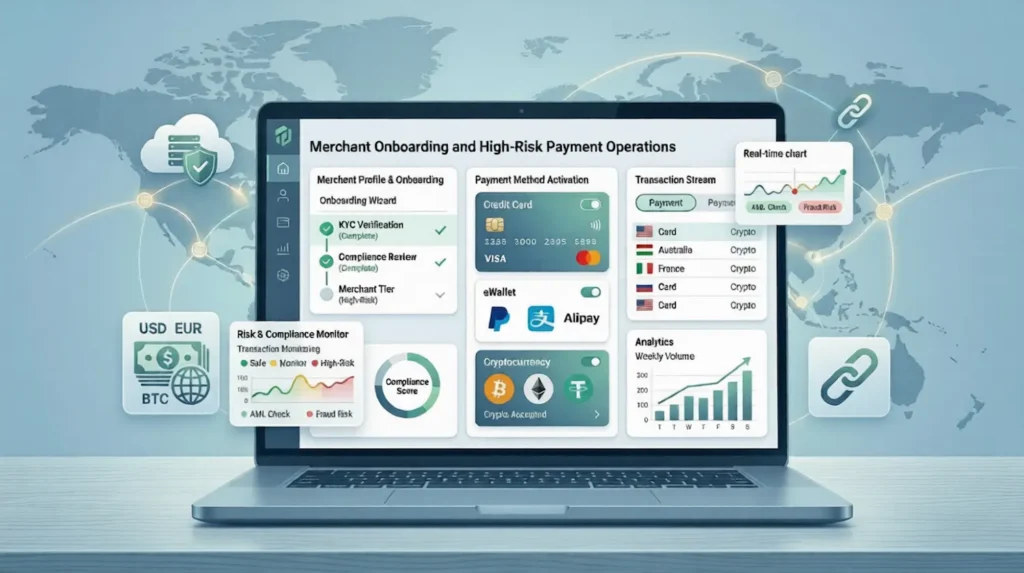
    Payment gateway vs payment processor for high-risk businesses with onboarding, payment options, and secure global monitoring

    What high-risk businesses should take away

    The difference between a payment gateway and a payment processor becomes much easier to understand once the jargon is removed.

    A payment gateway helps your business collect and send payment information securely. A payment processor helps move that transaction through the financial system.

    For high-risk businesses, that distinction matters because payments influence much more than checkout alone. They affect onboarding, payment flexibility, operational stability, and the overall customer experience. Businesses selling across borders may also need to think more carefully about international payments as part of that setup.

    That is why payment gateway vs payment processor for high-risk businesses is such a useful search topic. It helps merchants understand the stack before they commit to a provider.

    And for businesses that want to explore a gateway solution that supports crypto payments, card payments, and onramping in a simpler way, the NiftiPay New Client Service Request Form is a natural place to continue that conversation.

  • High-Risk Payment Gateway Onboarding Checklist: Documents You Need Before Applying

    High-Risk Payment Gateway Onboarding Checklist: Documents You Need Before Applying

    Applying for a high-risk merchant account shouldn’t feel like a scavenger hunt. Yet most “delays” happen for one simple reason: underwriting can’t verify something quickly—ownership, banking, website compliance, or how you handle disputes.

    This article gives you a practical high risk merchant account application checklist so you can gather the right documents before you apply, reduce back-and-forth, and move through onboarding faster—especially if you’re operating in the UK and EU.

    What underwriting is really trying to confirm

    Underwriters don’t ask for extra paperwork just because you’re “high-risk.” They’re assessing whether your business is:

    • Legitimate (KYB-ready): real company, real people, traceable ownership
    • Operational: clear product/service delivery, accessible support, transparent policies
    • Financially coherent: bank statements match the business, projections make sense
    • Risk-manageable: chargeback prevention, refund clarity, dispute response plan
    • Compliant in market: UK/EU consumer rules, privacy standards, and restricted-market logic

    If you prepare for those five points, you’re meeting the intent behind “high risk merchant account requirements,” not just uploading random PDFs.

    High risk merchant account application checklist documents organized in a folder with an ID card and ownership structure chart for high-risk onboarding.

    High risk merchant account application checklist: documents to collect

    Below is the core list of documents needed for a high risk merchant account. Requirements vary by provider, but this covers what most onboarding teams request across UK/EU.

    Business identity and registration (KYB fundamentals)

    • Certificate of incorporation / company registration
    • Articles of association (or equivalent formation documents)
    • Proof of business address (utility bill, lease, or official register extract)
    • Tax identifiers (UK UTR if applicable; EU VAT ID where relevant)
    • Trade name/DBA documentation (if you operate under a brand name different from the legal entity)

    Make it easy: Ensure the legal name and address match across documents. Small mismatches are a common cause of “silent delays.”

    Ownership and UBO verification

    • Government-issued ID for beneficial owners and key directors
    • Proof of address for beneficial owners (recent utility bill/bank letter)
    • Ownership structure chart (especially if you have holding companies or multiple entities)
    • Director/officer register (where applicable)

    This is what many teams mean by high risk merchant account underwriting documents—they need a clean, traceable ownership picture.

    Banking and financials

    • Business bank account details (IBAN/SWIFT for EU; UK sort code/account)
    • Business bank statements (commonly last 3–6 months)
    • Basic financials (P&L / balance sheet) if you’re applying for higher volume or larger tickets
    • Explanation note for seasonality or spikes (a short paragraph can prevent confusion)

    Why it matters: Underwriters use bank statements to confirm stability and match business activity to your stated model.

    Processing history (if you’ve processed before)

    • Previous processor statements (typically 3–6 months)
    • Chargeback and refund ratios (if available)
    • Dispute reason trends (even a simple summary helps)
    • Any prior reserve/hold details (and context)

    If you have it, processing history often speeds decisions because it replaces guesswork with evidence.

    Website, checkout, and customer journey proof

    Underwriting will review your site like a skeptical customer.

    Prepare:

    • Live website URL (fully functional, not “coming soon”)
    • Product/service pages with clear pricing and what customers receive
    • Checkout flow screenshots (especially if parts are behind login)
    • Subscription details (billing cadence, cancellation method, trial terms if any)
    • Delivery/fulfillment proof (shipping, digital access, appointment booking, etc.)

    UK/EU note: If you serve multiple countries, show how you handle currencies, delivery timelines, and support coverage.

    Policies that prevent disputes (non-negotiables)

    • Refund/return policy (clear timelines, conditions, and method)
    • Shipping/delivery policy (timeframes, tracking, digital delivery details)
    • Terms and conditions
    • Privacy policy + cookie policy (UK GDPR / GDPR aligned)
    • Support/contact page (email at minimum; response expectations clearly stated)

    A vague refund policy almost always turns into higher disputes—underwriting knows it.

    Compliance and licensing (industry-dependent)

    Because Niftipay supports multiple high-risk verticals, your documentation here depends on what you sell and where.

    You may be asked for:

    • Industry licenses/authorizations (where required)
    • Supplier agreements or proof of distribution rights (where relevant)
    • Age verification approach (if applicable)
    • Restricted-market rules (where you do/don’t sell, and why)
    • Marketing compliance notes (especially if your category is sensitive)

    If you operate across UK + EU, a simple “Markets Served” page or PDF summary can reduce follow-ups.

    Operations, support, and risk controls

    • Customer support SOP (even 1–2 pages is enough)
    • Chargeback process (monitoring, response timelines, escalation)
    • Fraud prevention overview (3DS/SCA approach, velocity rules, manual review triggers)
    • Fulfillment workflow (warehouse/3PL proof or digital delivery mechanism + SLAs)

    This is where providers decide if your risk is manageable, not whether your business is “good” or “bad.”

    Security and technical readiness

    Not always requested, but common:

    • Checkout security summary (hosted checkout, tokenization, platform used)
    • If API-based: a short description of your integration setup (Shopify/WooCommerce/custom)
    • Data handling note (where customer data is stored and who has access)

    For UK/EU, showing you’re aligned with strong authentication and privacy expectations builds confidence.

    How to package your submission so it gets approved faster

    Even with perfect documents, messy submissions slow everyone down. Use a simple structure:

    Folder: CompanyName_Onboarding_Pack_YYYY-MM
    Subfolders:
    01_Company / 02_Ownership / 03_Banking / 04_Processing / 05_Website / 06_Policies / 07_Compliance / 08_Ops_Risk

    File naming: CompanyName_DocumentType_Date.pdf

    Add a one-page summary (seriously—this helps):

    • What you sell + how delivery works
    • UK/EU markets served + currencies
    • Expected monthly volume + average ticket
    • Support channels + response times
    • Risk controls (chargeback + fraud, bullet points)

    Common reasons high-risk applications get delayed

    Inconsistent information

    Different company address formats, mismatched director names, or outdated documents.

    Website red flags

    Missing policies, unclear pricing, no accessible contact info, or confusing checkout.

    Unrealistic projections

    Claiming large volume with no processing history or operational capacity to support it.

    No dispute plan

    If you can’t explain how you prevent and handle chargebacks, underwriting slows down.

    Cross-border ambiguity

    If you serve UK + EU, be precise about delivery, returns, languages, and support coverage.

    Copy/paste checklist (quick version)

    • Company registration + formation docs
    • Proof of business address
    • Tax/VAT identifiers (as applicable)
    • UBO IDs + proof of address
    • Ownership chart (if complex)
    • Business bank statements (3–6 months)
    • Processing history statements (if available)
    • Live website + checkout proof
    • Refund, delivery/shipping, T&Cs, privacy + cookies
    • Support SOP + dispute handling plan
    • Compliance/licensing (if required)
    • Fraud prevention + 3DS/SCA approach summary

    Where Niftipay fits (without slowing your application)

    Niftipay is built for high-risk businesses across UK and EU, so your vertical may change—but the onboarding logic doesn’t: underwriting still needs clear KYB, operational proof, policies, and risk controls.

    If you want to reduce back-and-forth, a good next step is to book a demo and we’ll show:

    • What an “underwriting-ready” onboarding pack looks like
    • How to present risk controls and processing history clearly
    • The fastest way to align website/policies with UK/EU expectations

    If you’re preparing to apply, keep this high risk merchant account application checklist as your pre-application pack and update it as your business scales.

  • Rolling Reserves for High-Risk Merchants: What They Are and How They Work

    Rolling Reserves for High-Risk Merchants: What They Are and How They Work

    Rolling reserves for high-risk merchants are one of the most important payment terms to understand before accepting a new processing agreement. For many high-risk merchants, the real complexity in payment processing does not begin at checkout. It begins during onboarding, when approval terms start to appear and a provider introduces a condition that affects cash flow from day one: the rolling reserve.

    This is often the moment when a merchant realizes that getting approved is only part of the conversation. The next question is how the account will operate in practice, how payouts will be structured, and how much revenue will be temporarily held.

    That is why rolling reserves matter. For high-risk businesses, they are not just a technical payment term. They can shape liquidity, planning, and the overall economics of a payment setup.

    This guide explains what rolling reserves are, how they work, why they are common in high-risk payment processing, and what merchants should review before accepting reserve terms.

    Why Rolling Reserves Appear in High-Risk Payment Processing

    For many businesses, rolling reserves for high-risk merchants have a bigger operational impact than headline processing fees because they directly affect short-term cash flow. When a percentage of daily revenue is held back, the business may still be selling well—yet feel tighter on liquidity when it comes to inventory, ad spend, supplier payments, or refund coverage.

    This is why rolling reserves for high-risk merchants should be evaluated as an operational term, not just a line in the contract. Two providers can look similar on pricing and approval speed, but the reserve structure can change how the account performs week to week, especially during periods of growth, seasonality, or elevated refunds.

    The key is to read rolling reserves for high-risk merchants in context: payout timing, fulfillment cycles, dispute exposure, and working capital needs. When you model the reserve against your real numbers, it becomes easier to judge whether the terms are manageable—or whether they will create avoidable pressure once processing goes live.

    What a Rolling Reserve Actually Means

    A rolling reserve is a percentage of processed funds that is temporarily withheld and released later on a rolling schedule.

    The important part is the word “rolling.” This is not usually a one-time hold applied once and forgotten. It is an ongoing structure where a portion of incoming payments is held for a defined period, while previously held amounts are released over time.

    For high-risk merchants, the practical impact of a rolling reserve depends on three factors:

    • the percentage being withheld,
    • the length of the hold period,
    • and the release schedule.

    Those terms determine how much cash remains available for operations versus how much is temporarily locked as part of the payment agreement.

    How Rolling Reserves Work in Practice

    In practice, rolling reserves are usually structured as a percentage-plus-time model.

    A provider may retain a percentage of processed volume and release those funds after a specific number of days, while new reserves continue to be collected in the meantime. This creates a continuous reserve cycle rather than a single blocked amount.

    From the merchant’s point of view, this matters because reserve terms affect short-term liquidity. A business may show strong sales volume and still feel cash pressure if reserve holds, refunds, ad spend, supplier obligations, and payout timing are all hitting at the same time.

    This is why rolling reserves should be reviewed as an operational term, not just a pricing detail.

    Why Rolling Reserves Matter More Than They Look on Paper

    Many merchants compare payment providers by focusing first on approval speed, processing fees, or headline rates. Reserve terms are sometimes reviewed later, even though they can have a bigger day-to-day impact than expected.

    For high-risk businesses, a rolling reserve can directly influence:

    • working capital planning,
    • inventory purchasing,
    • marketing spend pacing,
    • supplier payment timing,
    • and refund capacity.

    Two offers can look similar at first glance and still behave very differently once reserve terms are applied. A faster approval or lower processing rate may not be the strongest option if the reserve structure creates pressure on cash flow.

    That is why rolling reserves are not only an underwriting topic. They are also a business planning topic.

    What Influences Rolling Reserve Terms

    There is no single reserve model that applies to every high-risk merchant. Providers usually set reserve terms based on a mix of risk signals and operating characteristics.

    The most common factors include:

    • business vertical and risk profile,
    • chargeback and refund exposure,
    • processing history,
    • business age,
    • billing model (one-time or recurring),
    • fulfillment timelines,
    • average transaction size,
    • sales volatility,
    • and geographic complexity.

    This is also why reserve terms can vary significantly from one provider to another. The same merchant may receive different reserve conditions depending on the provider’s risk appetite, underwriting approach, and account structure.

    What High-Risk Merchants Should Review Before Accepting a Rolling Reserve

    A rolling reserve is not automatically a bad term, but it should be reviewed carefully and in context—especially when discussing rolling reserves for high-risk merchants, where payout timing and liquidity can shift quickly.

    Before agreeing to reserve conditions, merchants should clarify:

    • the exact reserve percentage,
    • how long funds are held,
    • when and how reserves are released,
    • whether reserve terms can be reviewed later,
    • what could trigger reserve changes,
    • and how reserves interact with chargebacks and refunds.

    This is where preparation makes a difference. Merchants who already understand their dispute profile, refund patterns, and cash flow cycles are in a much better position to evaluate whether a reserve structure is workable.

    The goal is not only to get approved. It is to get approved under terms the business can actually operate with.

    Rolling reserves for high-risk merchants explained with reserve hold period and payout release schedule on laptop

    Rolling Reserves and High-Risk Payment Gateway Approval Are Closely Connected

    For high-risk merchants, reserve terms are rarely a separate conversation. They are often part of the same underwriting process that determines approval conditions, onboarding requirements, and payout structure.

    In other words, approval and reserve terms usually move together.

    A provider may be comfortable approving the account, but only with a reserve that reflects the merchant’s risk profile. That is why rolling reserves for high-risk merchants should be reviewed alongside approval speed, documentation requirements, and operational expectations—not after the fact.

    This is also why internal preparation helps across multiple stages: a stronger website, clearer policies, realistic projections, and better risk controls can support a smoother review process overall.

    How to Evaluate Reserve Terms Without Guessing

    The most practical way to evaluate a rolling reserve is to model the impact using your real operating numbers.

    Instead of treating reserve terms as abstract payment language, review them against:

    • your average order value,
    • expected monthly volume,
    • refund timing,
    • supplier payment obligations,
    • ad spend cycles,
    • and payout dependency.

    A reserve may look manageable in isolation but create pressure when combined with other timing-sensitive costs. On the other hand, a reserve can be a workable trade-off if the provider fit, approval path, and payout structure support stable processing.

    For high-risk merchants, the key question is usually not whether a rolling reserve exists. It is whether the reserve terms fit the reality of the business.

    Before You Accept the Offer, Review the Cash Flow Story

    Rolling reserves are one of the clearest examples of why payment processing for high-risk merchants should be evaluated beyond headline rates.

    Approval matters. Pricing matters. But reserve terms can shape what happens after the account goes live—especially during growth, refund spikes, or seasonal volatility, which is why rolling reserves for high-risk merchants should be reviewed as more than a contract detail.

    Before accepting any payment offer, review the reserve structure as part of the full operational picture: approval conditions, payout timing, dispute exposure, and cash flow resilience.

    That is where better payment decisions usually happen—not in the first number on the quote, but in the terms that determine how the account performs over time.

  • High-Risk Payment Gateway Approval: How to Get Approved Faster

    High-Risk Payment Gateway Approval: How to Get Approved Faster

    Getting approved for payment processing is one of the biggest friction points for high-risk merchants. In many cases, the delay is not only about the industry itself, but about how the business is presented during underwriting.

    A weak website, inconsistent business information, or missing documents can slow down high-risk payment gateway approval even when the business is legitimate. On the other hand, merchants who prepare properly often move much faster.

    This guide explains what providers review, what usually causes delays, and what you can do to improve your approval speed from day one.

    Why High-Risk Payment Gateway Approval Takes Longer

    High-risk onboarding is usually more detailed than standard payment setup. Providers need to understand not only what you sell, but also how your business handles refunds, disputes, fulfillment, and customer support.

    That is why high-risk payment gateway approval often takes longer: underwriting needs more clarity before making a decision.

    The most common delays come from:

    • missing or outdated documents,
    • unclear website policies,
    • inconsistent company details,
    • unrealistic volume projections,
    • and applying to a provider that does not fit your vertical.

    What Providers Review Before Approval

    To move faster, it helps to know what underwriting is actually checking during high-risk payment gateway approval.

    Most providers will review:

    • your legal business details and ownership,
    • your website and checkout flow,
    • your products or services,
    • expected monthly volume and average ticket size,
    • target countries and billing model,
    • and your refund, fraud, and chargeback controls.

    The goal is not just to approve the account, but to assess whether your payment activity is manageable over time.

    How to Speed Up High-Risk Payment Gateway Approval

    The fastest way to improve high-risk payment gateway approval is simple: reduce back-and-forth with underwriting.

    Merchants who get approved faster usually do three things well:

    • prepare documents before applying,
    • align business information across all materials,
    • and make their website underwriting-ready.

    It sounds basic, but this is where most delays start.

    Prepare Your Business Information Before You Apply

    Before submitting any application, make sure your key business data is consistent everywhere.

    This includes:

    • legal company name,
    • business address,
    • ownership details,
    • website domain,
    • support email and phone,
    • banking details,
    • and operating model (one-time, subscription, cross-border, etc.).

    Consistent information helps underwriting move faster and improves high-risk payment gateway approval by reducing clarification requests.

    Make Your Website Underwriting-Ready

    A professional-looking site is not enough. For high-risk payment gateway approval, your website needs to be clear from an underwriting perspective.

    Your site should show:

    • what you sell,
    • how customers pay,
    • contact information,
    • Terms & Conditions,
    • Privacy Policy,
    • Refund / cancellation policy,
    • shipping or delivery details (if applicable).

    If underwriters cannot quickly understand your business, they will ask more questions—and every question adds time. Underwriters will also look at how your business manages disputes, so having clear processes in place matters—especially if you are already working on chargeback prevention strategies for high-risk industries.

    Submit a Clean Document Pack Upfront

    One of the biggest time-wasters in high-risk payment gateway approval is sending documents one by one after each request.

    A better approach is to prepare a complete onboarding pack before applying. Depending on the provider and vertical, this may include:

    • company registration documents,
    • owner ID,
    • proof of address,
    • bank confirmation or statement,
    • processing history (if available),
    • and licenses (if required).

    Use current files, clear scans, and organized filenames. Small details like this can speed up review more than most merchants expect.

    Be Realistic About Volumes and Risk

    Trying to look bigger or lower-risk than you really are can hurt high-risk payment gateway approval.

    Underwriters prefer clear, realistic numbers:

    • expected monthly volume,
    • average order value,
    • top countries,
    • refund expectations,
    • and whether billing is recurring or one-time.

    A credible profile usually performs better than an overly optimistic one.

    Show Your Risk Controls Early

    Providers want to see how you manage operational risk. If you explain this early, high-risk payment gateway approval tends to move more smoothly.

    Be ready to describe:

    • fraud prevention checks,
    • refund handling process,
    • customer support response times,
    • chargeback reduction steps,
    • and billing descriptor clarity.

    This shows the provider that your business is prepared to process payments responsibly. Chargeback exposure remains one of the key operational signals in high-risk underwriting, so merchants that improve dispute prevention usually move through reviews more smoothly.

    High-risk payment gateway approval document checklist and underwriting preparation on an office desk.

    Choose the Right Provider for Your Vertical

    A common mistake is applying broadly instead of applying strategically. Many delays happen because the provider is simply not a fit.

    Before applying, confirm the provider supports your:

    • industry,
    • target markets,
    • transaction type (one-time or subscription),
    • and settlement needs.

    Provider fit is one of the fastest ways to improve high-risk payment gateway approval without changing anything else in your business.

    What Slows Approval Even When the Business Is Legitimate

    Many legitimate merchants get delayed for avoidable reasons. The pattern is usually the same: the business is real, but the application package is incomplete or hard to review quickly.

    Typical issues include unfinished websites, mismatched company details, weak policy pages, low-quality files, and slow replies to underwriting questions.

    These issues do not always cause rejection, but they often slow high-risk payment gateway approval and create unnecessary friction.

    Before You Apply, Think Like an Underwriter

    Before submitting your application, review your business the way a provider will.

    Check whether your website clearly explains what you sell and how customers are billed. Make sure your documents are complete and your company information matches across every file and form. Prepare realistic volume expectations and be ready to explain your fraud, refund, and chargeback controls.

    Merchants who prepare their documents, website, and risk controls in advance usually move faster through underwriting—and the same preparation also helps with reserves and chargeback performance over time, especially if you are already working on how to reduce chargebacks in high-risk industries.

    That preparation makes high-risk payment gateway approval more predictable—and usually much faster.

  • How to Reduce Chargebacks in High-Risk Industries: A Practical Playbook to Protect Revenue and Keep Processing Stable

    How to Reduce Chargebacks in High-Risk Industries: A Practical Playbook to Protect Revenue and Keep Processing Stable

    Chargebacks are one of the biggest growth blockers in High-Risk Industries. They drain revenue, increase processing costs, trigger card network monitoring programs, and can put merchant accounts at risk—often right when a business is scaling. The tricky part is that many chargebacks are preventable, but prevention requires more than “better customer service.” It takes a system: clear expectations, clean payment flows, strong fraud controls, and evidence-ready operations.

    This guide explains how to reduce chargebacks in High-Risk Industries with tactics you can implement immediately—whether you’re running subscriptions, digital goods, marketplaces, or any high risk business industries where dispute rates are naturally higher.

    Why chargebacks spike in high risk business industries

    In a typical high risk industry, chargebacks rise for a few predictable reasons:

    • Higher fraud pressure: Fraud rings target categories where goods are digital, high-demand, or hard to verify delivery.
    • Subscription confusion: Free trials, recurring billing, and renewals often lead to “I didn’t authorize this” disputes.
    • Expectation gaps: Shipping timelines, product results, or refund terms are misunderstood—or not communicated clearly enough.
    • Descriptor mismatch: Customers don’t recognize the charge on their statement and dispute it.
    • Support friction: If refunds feel hard to get, customers go straight to the bank.

    Reducing chargebacks in High-Risk Industries means designing your customer journey so the easiest path is not “call my bank.”

    Start with the basics: know your chargeback reasons (and fix the real cause)

    Before you change tools, identify your top 2–3 dispute drivers. Most disputes fall into these buckets:

    Fraud and “No authorization”

    Often triggered by stolen cards or account takeover. Common in many High-Risk Industries, especially when delivery is instant or digital.

    “Product not received” or “not as described”

    Usually an expectation problem: unclear shipping times, vague descriptions, or inconsistent fulfillment.

    “Canceled recurring / refund not processed”

    A subscription and refund workflow problem—very common in a high risk industry.

    What to do: categorize disputes weekly, by reason code and product/offer, and track them against traffic sources, checkout steps, and fulfillment timelines. In High-Risk Industries, small operational issues become big dispute spikes fast.

    Build a chargeback prevention funnel (before you fight disputes)

    Think of chargeback reduction as a funnel with four layers:

    1. Stop fraud at the door
    2. Prevent confusion at checkout
    3. Resolve issues before banks get involved
    4. Win disputes that still happen

    Businesses in high risk business industries that treat chargebacks like a funnel consistently outperform those who only “respond” to disputes.

    Layer 1: Fraud controls that reduce “no authorization” disputes

    Use strong authentication where it matters

    If you can support 3D Secure (3DS), use it intelligently:

    • Apply 3DS to higher-risk segments (new customers, high AOV, mismatched country/IP, risky BINs).
    • Avoid blanket 3DS if it hurts conversion—segment it.

    In High-Risk Industries, the goal is to reduce fraudulent approvals without killing legitimate sales.

    Score risk, don’t guess

    Use a fraud/risk engine (or gateway rules) that can evaluate:

    • Device fingerprint + behavioral signals
    • Velocity checks (attempts per card/email/device)
    • IP risk and proxy/VPN detection
    • BIN country vs shipping country mismatches
    • Email age, phone validity, address verification (where available)

    If you operate in a high risk industry, even basic velocity rules can cut disputes dramatically.

    Tighten “first purchase” policies

    Many chargebacks come from first-time buyers. Consider:

    • Lower maximum order value for first purchase
    • Require signature / tracked shipping above a threshold
    • Delay instant delivery for suspicious orders (manual review queue)

    his is especially effective for High-Risk Industries selling digital goods and instant-delivery products.

    Layer 2: Set expectations at checkout (the fastest way to cut disputes)

    Chargebacks are often “avoidable misunderstandings.” Fix them where they start: the offer and checkout.

    Make the billing terms impossible to miss

    For subscriptions and trials in High-Risk Industries:

    • Show the renewal price and date near the pay button
    • Use plain language (no legal-style blocks)
    • Send an immediate post-purchase email with billing terms
    • Include a “Manage subscription” link in every receipt email

    A lot of “canceled recurring” disputes in a high risk industry are caused by customers not remembering what they accepted.

    Optimize the billing descriptor (this one matters more than people think)

    Many disputes happen because customers don’t recognize the statement line.

    • Use a descriptor that matches your brand name and website
    • Add a recognizable support phone/email if possible
    • Keep it consistent across campaigns and offers

    For high risk business industries, descriptor clarity is a low-effort, high-impact win.

    Reduce “surprise” fees

    If you charge:

    • international shipping
    • duties/taxes
    • rush processing
      …show it clearly before payment and in the receipt.

    Surprises turn normal refunds into chargebacks in High-Risk Industries.

    Layer 3: Fix refunds and customer support so banks aren’t the “support team”

    Make refunds easy—and fast

    If a customer can’t get help in minutes, the bank becomes the shortcut.

    Best practices for High-Risk Industries:

    • Offer a simple self-serve refund/request form
    • Publish refund timelines clearly (“refunds processed within X business days”)
    • Refund before shipping when feasible
    • Use partial refunds strategically (when fair) to avoid escalation

    A fast refund is often cheaper than a dispute fee + product loss.

    Add a “chargeback save” workflow

    When a customer requests a refund:

    • respond quickly (within hours, not days)
    • offer resolution options: refund, replacement, store credit (when appropriate)
    • document everything automatically (timestamps, emails, order status)

    High-performing teams in a high risk industry treat support tickets as chargeback prevention.

    Use proactive order updates

    Send automated emails/SMS:

    • order confirmation
    • shipping confirmation with tracking
    • delivery confirmation
    • “How to get help fast” message

    For physical goods in High-Risk Industries, proactive tracking updates alone can cut “not received” disputes.

    Layer 4: Win the disputes you can’t prevent (representment that actually works)

    Even with perfect prevention, High-Risk Industries will still see disputes. Winning more of them means sending the right evidence—fast and organized.

    Build an evidence pack by dispute type

    For “no authorization”:

    • AVS/CVV match results (if available)
    • device fingerprint / session data
    • IP location + login timestamps
    • proof of account access and actions
    • 3DS authentication info (if used)

    For “not received”:

    • tracking number + carrier confirmation
    • delivery date/time
    • signature proof (if used)
    • customer communications showing updates

    For “not as described”:

    • product page screenshots at time of purchase
    • clear policy screenshots
    • customer acknowledgment (checkbox logs, receipts)
    • support logs offering resolution

    In a high risk industry, your ability to provide clean, consistent evidence can materially improve win rates.

    Tighten your internal documentation

    Winning disputes in High-Risk Industries often comes down to record quality:

    • store checkout page versions (or snapshots)
    • log consent to terms and recurring billing
    • retain customer communications
    • keep delivery proof attached to the order record

    Respond faster than you think you need to

    Banks and issuers run on deadlines. Build a weekly cadence:

    • review new disputes daily (or at least 3x/week)
    • prioritize high-value disputes
    • auto-compile evidence where possible

    Offer design: how to reduce chargebacks by changing what you sell (and how)

    In High-Risk Industries, the offer itself can be the problem. Consider these adjustments:

    Reduce aggressive trial-to-paid friction

    Trials drive disputes when customers forget or don’t understand renewal.

    • Send a reminder email 2–3 days before renewal
    • Make cancellation self-serve
    • Consider shorter trials with clearer value delivery

    Avoid vague promises

    If outcomes vary, write benefits honestly and add:

    • who it’s for / not for
    • expected timelines
    • realistic results

    “Not as described” disputes often start with marketing copy in a high risk industry that over-promises.

    Add friction only where risk is high

    Use friction selectively:

    • step-up verification for high-risk orders
    • manual review for risk clusters
    • stricter rules for risky traffic sources

    That’s how leading high risk business industries keep conversion while protecting approval quality.

    Traffic quality: marketing decisions that quietly increase chargebacks

    Not all chargebacks are a payments problem—many are a traffic problem.

    Audit affiliates and ad sources

    Some traffic sources create high dispute rates:

    • misleading pre-landers
    • aggressive “free” claims
    • unclear billing terms
    • incentivized clicks

    In High-Risk Industries, track chargebacks by:

    • campaign
    • affiliate
    • landing page
    • funnel version

    Then cut sources that generate “cheap” conversions but expensive disputes.

    Align landing pages with checkout reality

    If your ad says “instant,” but fulfillment takes 72 hours, chargebacks will follow.
    Consistency reduces disputes in every high risk industry.

    Subscription-specific tactics for High-Risk Industries

    If you run recurring billing, these are the biggest levers:

    Use smart dunning (and communicate it)

    When a payment fails:

    • retry on a schedule
    • notify the customer before and after retries
    • provide a simple update-payment link

    Clear communication prevents “I didn’t authorize” disputes from confused retries.

    Send “receipt + help” emails for every rebill

    Include:

    • amount and date
    • what the customer is paying for
    • how to cancel
    • fast support contact

    This is one of the most effective chargeback reducers in High-Risk Industries with subscriptions.

    The role of a payment partner in a high risk industry

    A processor/gateway setup that fits High-Risk Industries can help you:

    • apply risk rules without blocking good customers
    • support 3DS and other authentication options
    • monitor dispute ratios and alert early
    • optimize approval rates while keeping dispute rates stable

    If you’re using Niftipay (or evaluating providers for high risk business industries), prioritize partners that combine risk controls, analytics, and operational support—because chargebacks are rarely solved by one feature alone.

    A simple 30-day action plan to lower chargebacks

    Week 1: Visibility + quick fixes

    • Audit top dispute reasons and top products/offers
    • Improve statement descriptor and receipt emails
    • Add clear refund/cancel links to post-purchase messages

    Week 2: Checkout clarity

    • Make billing terms obvious (especially subscriptions)
    • Add “shipping/fulfillment expectations” near the pay button
    • Add proactive order updates

    Week 3: Fraud tightening

    • Add velocity rules + device/IP risk checks
    • Segment 3DS for risky cohorts
    • Set first-purchase limits and manual review triggers

    Week 4: Evidence readiness

    • Create evidence templates by dispute type
    • Attach tracking + communication logs to orders automatically
    • Establish a dispute response routine (3x/week minimum)

    This plan is designed for High-Risk Industries where you need measurable reduction without slowing growth.

    Keep more revenue without slowing growth

    In High-Risk Industries, the best chargeback strategy isn’t just “fight more disputes.” It’s building a system that prevents confusion, blocks fraud, and resolves issues before banks get involved—while keeping your checkout fast and your approvals healthy.

    If you treat chargebacks like a product (with monitoring, iteration, and clear ownership), you’ll see lower dispute rates, stronger processing stability, and more predictable scaling—even in a high risk industry where chargebacks are considered “normal.”

  • iGaming Payment Gateway: How to Choose the Best Solution for Growth, Security, and Global Scale

    iGaming Payment Gateway: How to Choose the Best Solution for Growth, Security, and Global Scale

    For operators in online casino, sportsbook, and betting markets, payments are not a backend detail—they are a revenue engine. The right iGaming payment gateway can improve player conversion, reduce failed deposits, lower chargeback pressure, and support faster expansion into new regions.

    In this guide, you’ll learn what separates a basic processor from a high-performing gateway, which features matter most for high-risk environments, and how to select the best setup for long-term profitability.

    Why an iGaming payment gateway is mission-critical

    In iGaming, users expect instant deposits, smooth withdrawals, and trusted checkout options. A weak payment stack creates friction, abandoned deposits, and retention problems.

    A strong iGaming payment processing strategy helps you:

    • Increase first-time deposit success rates
    • Support both casual and high-frequency players
    • Reduce fraud and bonus abuse
    • Handle cross-border complexity
    • Improve operational stability during peak events

    That is why leading operators prioritize a high-risk iGaming payment gateway built for volatility, not a generic low-risk setup.

    What is an iGaming payment gateway?

    An iGaming payment gateway is the infrastructure layer that securely processes deposits and withdrawals for gaming platforms, including card rails, crypto rails, and alternative methods. It also connects fraud controls, risk rules, and acquiring routes in real time.

    For operators, this means one control point for:

    • Authorizations and payouts
    • Risk checks and fraud screening
    • Payment routing and failover
    • Multi-currency acceptance
    • Reporting and reconciliation

    Core features of the best iGaming payment gateway

    If you want the best iGaming payment gateway, focus on capabilities that directly impact conversion and risk control.

    1) High-risk optimization and underwriting

    iGaming is a high-risk vertical by default. Your provider must understand this model and offer realistic onboarding, not generic rejection workflows. A true high-risk iGaming payment gateway includes vertical-specific underwriting and risk monitoring from day one. This foundation is what separates a generic processor from a true high risk payment gateway for iGaming operators.

    2) Card and crypto support in one flow

    Modern operators benefit from hybrid acceptance. A gateway that supports cards and crypto can serve broader player preferences and reduce single-rail dependency.

    Look for:

    • iGaming payment gateway with card payments
    • iGaming payment gateway with crypto
    • Optional conversion flows for smoother onboarding

    This approach often improves global conversion and operational resilience.

    3) Smart fraud prevention and chargeback prevention

    Fraud losses and disputes can quickly damage margins in gaming. Your gateway should provide:

    • Real-time fraud prevention rules (velocity, device, geo, behavior)
    • Built-in chargeback prevention workflows
    • Reason-code analytics and evidence support
    • Adjustable risk thresholds by market or payment method

    A robust iGaming payment gateway with fraud prevention is essential for stable scaling. For card payment security, operators should align with PCI DSS payment security standards

    4) Payment routing and orchestration

    Approval rates are not static. Issuer behavior changes by region, BIN, time window, and risk profile. With intelligent routing, transactions can be sent through the best-performing path dynamically.

    This is where payment routing and payment orchestration improve:

    • Authorization performance
    • Checkout continuity
    • Processor redundancy
    • Recovery from route degradation

    5) Multi-currency and global readiness

    International growth requires more than just accepting foreign cards. A global iGaming payment gateway should support:

    • Multi-currency checkout
    • Regional payment method logic
    • Localized risk and acceptance rules
    • Better reconciliation across entities

    If your target market includes Britain, evaluate iGaming payment gateway UK support as a separate requirement, not a checkbox.

    6) Fast settlement and payout visibility

    Cash flow matters. Operators should compare:

    • Funding schedules
    • Settlement times
    • Reserve structures
    • Payout transparency

    A fast settlement iGaming payment gateway can improve liquidity and reduce operational stress.

    7) API integration and platform flexibility

    Your payments stack should fit your product roadmap. Strong API integration enables custom cashier UX, promo logic, wallet sync, and automated reporting.

    When reviewing docs, prioritize:

    • Clear endpoints and webhook reliability
    • Versioning stability
    • Sandbox quality
    • Developer support speed

    A scalable iGaming payment gateway API integration is a strategic asset, not a technical bonus.

    Online casino vs sportsbook: payment needs are not identical

    An online casino payment gateway and a sportsbook payment gateway share core needs, but usage patterns differ.

    Online casino priorities

    • Fast repeated deposits
    • Tight fraud/risk loops
    • High uptime under session-heavy traffic

    Sportsbook priorities

    • Traffic spikes around events
    • Fast payment confirmation windows
    • Strong payout processing during peak cycles

    The best payment gateway for betting sites adapts risk and routing logic by product behavior, not one-size-fits-all rules.

    Common mistakes when selecting an iGaming payment gateway

    Avoid these frequent issues:

    • Choosing by headline fee only
    • Ignoring chargeback operations
    • Using one processor with no fallback
    • Underestimating regional acceptance differences
    • Delaying fraud rule customization
    • Treating integration as one-time setup

    The right betting payment gateway partner should help optimize performance continuously, not just onboard you.

    iGaming payment gateway mobile crypto payment confirmation with secure card support.

    How to evaluate providers with a practical scorecard

    Use this quick framework when comparing options:

    1. High-risk underwriting quality
    2. Card + crypto acceptance depth
    3. Fraud and chargeback tooling
    4. Routing intelligence and redundancy
    5. Multi-currency and regional support
    6. Settlement speed and reserve clarity
    7. API quality and implementation effort
    8. Reporting depth and support responsiveness

    This scorecard helps you identify the best payment gateway for iGaming businesses based on real operational impact.

    Where Niftipay fits for iGaming operators

    For teams that want a unified stack, Niftipay can support operators needing flexible, high-risk-ready acceptance across multiple rails. With card and crypto options under one framework, teams can simplify checkout logic, improve risk response, and scale more confidently across markets.

    Build a payment engine players trust

    A great iGaming payment gateway does more than move money. It protects conversion, supports compliance, and keeps your platform reliable when demand peaks.

    Operators that win long term treat payments as product infrastructure: optimized routing, strong fraud controls, smart dispute strategy, global currency support, and clean API architecture. Get this right, and payments become a growth advantage—not a bottleneck.

  • High-Risk Payment Gateway for CBD/Cannabis Merchants: What to Look for and How to Scale Safely

    High-Risk Payment Gateway for CBD/Cannabis Merchants: What to Look for and How to Scale Safely

    CBD and cannabis-related merchants face a unique payments reality: strong demand, complex regulations, and frequent processor restrictions. That is why choosing the right high-risk payment gateway for CBD/cannabis merchants is not optional—it is a core business decision that affects conversion rates, cash flow, compliance, and long-term growth.

    In this guide, you’ll learn why CBD and cannabis payments are considered high risk, how the right gateway works, and which features matter most if you want stable global payment acceptance.

    Why CBD/cannabis merchants are considered high risk

    A high-risk payment gateway for CBD/cannabis merchants is built to address the legal, banking, and risk challenges that standard processors often cannot handle. Even legitimate CBD and cannabis-adjacent businesses are often categorized as high risk due to a mix of legal fragmentation, banking caution, and elevated dispute exposure. In practice, this can lead to account instability with generic processors.

    Common risk drivers include:

    • Different legal status by country, region, or state
    • Strict age-gating and product restrictions
    • Higher scrutiny from acquiring banks
    • Chargeback exposure linked to recurring orders and shipping issues
    • Frequent policy changes by traditional payment providers

    Because of this, merchants need infrastructure specifically built for high-risk merchant payment processing, not a standard low-risk checkout stack.

    What a high-risk payment gateway for CBD/cannabis merchants should do

    A modern gateway for this vertical should do more than authorize payments. It should help you operate safely, reduce failed transactions, and keep processing continuity across markets.

    1) Support compliant payment flows by jurisdiction

    A proper high-risk payment gateway for CBD/cannabis merchants should help apply jurisdiction-aware controls, including product-level restrictions, payment method availability by region, and configurable risk logic. Merchants handling crypto-related flows should also align with global AML expectations, such as the FATF guidance on virtual assets.

    2) Provide strong merchant underwriting from day one

    Clear merchant underwriting is critical. You want a provider that understands CBD/cannabis business models and can evaluate your operation with realistic documentation requirements, not generic rejection criteria.

    3) Include advanced fraud screening and chargeback prevention

    You need configurable fraud screening (device signals, velocity checks, geo filters) and proactive chargeback prevention workflows (alerts, evidence management, reason-code analytics).

    4) Offer resilient payment routing and orchestration

    With payment routing and payment orchestration, transactions can be directed to the best available path based on market, risk profile, or payment type. This improves approval resilience when one route underperforms.

    5) Enable both card and crypto acceptance

    Many merchants benefit from running a high-risk card payment gateway and a crypto option in parallel. This reduces dependence on a single rail and gives customers more ways to pay.

    6) Deliver transparent reserve and payout terms

    For high-risk categories, reserve policies matter. Your provider should be clear about rolling reserve, release schedules, and settlement times so you can forecast cash flow accurately.

    Cards, crypto, and onramp: the practical model for CBD/cannabis checkout

    For many brands, the strongest setup is hybrid:

    • Card rails for familiar checkout behavior
    • Crypto rails for added flexibility and global reach
    • Optional crypto onramp for users entering digital assets from fiat

    This model can improve conversion and reduce operational risk by diversifying acceptance methods across customer segments.

    Key features to prioritize when evaluating providers

    If you are comparing options, this checklist helps identify the best high-risk payment gateway for your CBD/cannabis business:

    • CBD/cannabis policy compatibility and vertical expertise
    • Global coverage with multi-currency checkout
    • Smart decline handling and retry logic
    • Built-in fraud and dispute tools
    • Clear rolling reserve policy
    • Predictable settlement reporting
    • Reliable API integration for custom checkout and automation
    • Strong uptime and support responsiveness

    A strong provider should not only approve you—it should help you improve approval rates month over month.

    UK and cross-border considerations for CBD/cannabis merchants

    If your company targets British or international customers, prioritize a high-risk payment gateway UK setup with cross-border flexibility. You need:

    • Clear regional controls on what can be sold and where
    • Currency support aligned with your top markets
    • Compliance-aware onboarding and risk monitoring
    • Stable payouts and transparent reconciliation

    For growth brands, global readiness is often the difference between seasonal sales and sustainable scale.

    Common mistakes that hurt payment stability in this vertical

    Many merchants lose performance due to avoidable issues:

    • Using a low-risk gateway not built for CBD/cannabis
    • Relying on one processor with no redundancy
    • Weak fraud rules that increase dispute exposure
    • Unclear shipping and billing descriptors
    • Ignoring reserve impact on cash flow planning
    • Treating compliance as a one-time setup instead of ongoing operations

    Fixing these fundamentals can significantly improve acceptance consistency.

    How Niftipay can support CBD/cannabis merchant growth

    For merchants needing flexibility across payment rails, a high-risk-focused stack like Niftipay high-risk payment gateway can help unify card and crypto operations under one framework. With Niftipay, merchants can simplify checkout strategy, strengthen risk controls, and scale more confidently in complex markets.

    Turn payment risk into payment advantage

    In CBD/cannabis commerce, payment infrastructure is not just backend tech—it is a growth lever. The right high-risk payment gateway for CBD/cannabis merchants helps you protect revenue, maintain compliance, and expand globally with fewer interruptions.

    If you want stable performance in a regulated, fast-moving category, choose a gateway designed for high-risk complexity: routing intelligence, strong underwriting, fraud controls, and flexible payment rails across cards and crypto.

  • High-Risk Payment Gateway Explained: How It Works, Why It Matters, and How to Choose the Right One

    High-Risk Payment Gateway Explained: How It Works, Why It Matters, and How to Choose the Right One

    If your business has ever faced payment declines, account freezes, or slow approvals, you already know one thing: not all payment infrastructure is built for high-risk industries. A high-risk payment gateway is designed specifically for merchants that operate in sectors with elevated chargeback rates, regulatory complexity, or cross-border payment challenges.

    In this guide, you’ll learn what a high-risk gateway is, how it works end to end, and what features matter most when comparing providers. You’ll also see how modern options like Niftipay can help businesses simplify global acceptance with better control over risk, costs, and scalability.

    What is a high-risk payment gateway?

    A high-risk payment gateway is a payment technology layer that authorizes, routes, and secures transactions for businesses considered higher risk by banks and processors. This includes industries such as iGaming, forex, adult, nutraceuticals, subscription models, and other verticals with higher-than-average dispute exposure.

    Unlike standard gateways, a high-risk payment gateway for businesses is built to support:

    • Higher-risk merchant underwriting requirements
    • Advanced fraud controls and risk monitoring
    • Flexible processing across cards and crypto
    • Cross-border transaction support
    • Improved tolerance for sector-specific risk profiles

    In practical terms, a high-risk merchant account gateway helps merchants keep payments flowing where traditional processors often fail.

    How does a high-risk payment gateway work?

    Understanding how does a high-risk payment gateway work is key to choosing the right provider. The transaction lifecycle usually includes several layers working together:

    1. Checkout and data capture

    The customer selects a payment method (card, crypto, or local option) at checkout. The gateway securely captures payment data and tokenizes sensitive information for safer transmission.

    2. Risk checks and fraud screening

    Before authorization, the system runs fraud screening rules such as velocity checks, geo-risk filters, device signals, and behavioral analysis. This step helps reduce suspicious transactions and supports chargeback prevention.

    3. Payment routing and orchestration

    With payment routing, the gateway can send transactions through the most suitable acquiring path based on region, card type, risk profile, or approval probability.
    With payment orchestration, merchants can manage multiple processors and fallback logic from one layer, improving resilience and conversion.

    4. Authorization and settlement

    The issuer approves or declines the transaction. Approved transactions move into clearing and settlement. Providers differ in settlement times, reserve structures, and payout flexibility.

    5. Reporting, disputes, and optimization

    Post-transaction, merchants monitor approvals, declines, disputes, and refunds. Good high-risk payment processing solutions include dashboards, webhooks, and actionable analytics to improve approval rates over time.

    Why high-risk businesses need specialized payment processing

    Generic PSPs are often optimized for low-risk retail. High-risk merchants need infrastructure that handles volatility, international traffic, and stricter compliance requirements.

    A strong high-risk merchant payment processing stack can help you:

    • Increase approval rates with smart routing
    • Reduce avoidable declines
    • Manage exposure through proactive risk rules
    • Support global buyers with multi-currency checkout
    • Combine crypto and cards in one flow

    This is especially important if your growth depends on recurring revenue, high ticket sizes, or traffic from multiple jurisdictions.

    Core components of a high-risk payment gateway for businesses

    When evaluating a global high-risk payment gateway, focus on architecture, not only headline fees.

    Merchant underwriting and onboarding

    Merchant underwriting determines whether your business can process and under what terms. High-risk-ready providers typically have clearer onboarding playbooks, realistic compliance checks, and better vertical knowledge. High-risk merchants operating in crypto-related flows should align with global AML expectations, such as the FATF guidance for virtual assets and VASPs.

    Reserve policy and rolling reserve mechanics

    Many high-risk setups include a rolling reserve to offset future disputes. You should understand:

    • Reserve percentage
    • Hold duration
    • Release schedule
    • Conditions for reserve reduction

    Transparent reserve policy is essential for cash-flow planning.

    Card acceptance with high-risk support

    A robust high-risk card payment gateway should support global schemes, recurring logic, retry flows, and issuer-aware decline management.

    Crypto acceptance and onramp capabilities

    A crypto payment gateway for high-risk businesses can add speed, reach, and optionality. If your customers need fiat-to-crypto conversion, a high-risk payment gateway with onramp plus crypto onramp support becomes a major growth lever.

    API integration and operational control

    Strong API integration enables custom checkout, automation, reconciliation, and ERP/CRM connectivity. For scaling teams, API quality is often more important than surface-level UI features.

    High-risk payment gateway UK: what merchants should look for

    For companies targeting or operating from Britain, a high-risk payment gateway UK should be assessed on:

    • UK and cross-border acquiring compatibility
    • GBP and multi-currency support
    • Compliance posture and risk controls
    • Payout reliability and clear settlement reporting
    • Localized support for high-risk sectors

    If your audience is international, make sure UK coverage also extends smoothly into EEA and global corridors.

    Industry use cases: matching gateway capabilities to your model

    Different verticals need different risk and payment setups. The best high-risk payment gateway is the one aligned with your business model.

    iGaming and betting

    A high-risk payment provider for iGaming should offer fast authorizations, robust fraud tools, multi-currency acceptance, and strong uptime during traffic spikes.

    Forex and trading platforms

    A high-risk payment gateway for forex needs precise risk logic, global card handling, and fast settlement visibility to support active user flows.

    Adult businesses

    A high-risk payment gateway for adult businesses should prioritize processor redundancy, dispute management, and stable recurring billing tools.

    Nutraceutical and supplement brands

    A high-risk payment gateway for nutraceuticals should support subscription/continuity models, chargeback defense workflows, and flexible descriptor management.

    CBD/cannabis and related products

    A high-risk payment gateway for CBD/cannabis merchants should provide compliant processing pathways, jurisdiction-aware controls, enhanced fraud screening, and reliable support for cross-border payments where legally permitted.

    Regulated or restricted goods

    A high-risk payment gateway for regulated or restricted goods should include stricter merchant underwriting, advanced transaction monitoring, clear reserve policies, and adaptable risk rules to maintain payment continuity while meeting compliance obligations.

    How to evaluate the best high-risk payment gateway for your business

    Use this practical checklist when comparing providers:

    1. Approval strategy: Do they support intelligent routing and retry logic?
    2. Risk stack: Are fraud, disputes, and monitoring built in?
    3. Commercial clarity: Are fees, reserves, and settlement terms transparent?
    4. Coverage: Can they handle your target countries and currencies?
    5. Payment mix: Do they support both cards and crypto with onramp options?
    6. Integration quality: Is the API well documented and developer-friendly?
    7. Operational visibility: Do you get real-time analytics and alerts?

    This framework helps move beyond marketing claims and identify true high-risk payment processing solutions.

    Where Niftipay fits in the high-risk payments landscape

    For merchants that need one stack for modern global acceptance, the Niftipay high-risk payment gateway is positioned around simplicity, speed, and flexibility. With Niftipay, businesses can combine traditional rails and digital assets without managing disconnected vendors.

    For growing teams, this unified approach can simplify operations across:

    • Crypto and card checkout flows
    • Multi-market expansion
    • Risk control and fraud response
    • Integration workflows and automation

    Build a payment stack that grows with your risk profile

    A high-risk business cannot rely on fragile payment infrastructure. The right high-risk payment gateway does more than process transactions—it protects revenue, improves acceptance, and gives you room to scale globally.

    If your business needs resilient high-risk merchant payment processing, prioritize providers built for complexity: smart routing, strong risk controls, transparent reserve policies, and support for both cards and crypto. That is what turns payments from a bottleneck into a competitive advantage.