International payments are a core part of modern online commerce. If your business sells across borders, works with overseas customers, or wants to expand into new markets, the way you handle payments can affect everything from checkout conversion to customer trust.
That is why international payments matter so much. They are not just about moving money from one country to another. They involve currencies, payment methods, fees, fraud controls, settlement flow, and the customer experience at checkout.
This guide explains what international payments are, how they work, the most common challenges businesses face, and what to look for in a payment solution that supports global growth.
What are international payments?
International payments are transactions made between customers, businesses, or financial parties in different countries.
In practice, that can mean a customer in one country paying a merchant in another, a business accepting payments in multiple currencies, or a platform handling cross-border transactions through different payment methods.
For ecommerce and digital businesses, international payments often involve:
- multiple currencies
- cross-border card transactions
- local or alternative payment methods
- foreign exchange considerations
- fraud and compliance checks
- settlement across different markets
As global commerce grows, businesses need payment systems that make these transactions feel simple on the surface, even when the infrastructure behind them is more complex.
How international payments work
The payment flow depends on the method being used, but the basic structure is usually similar.
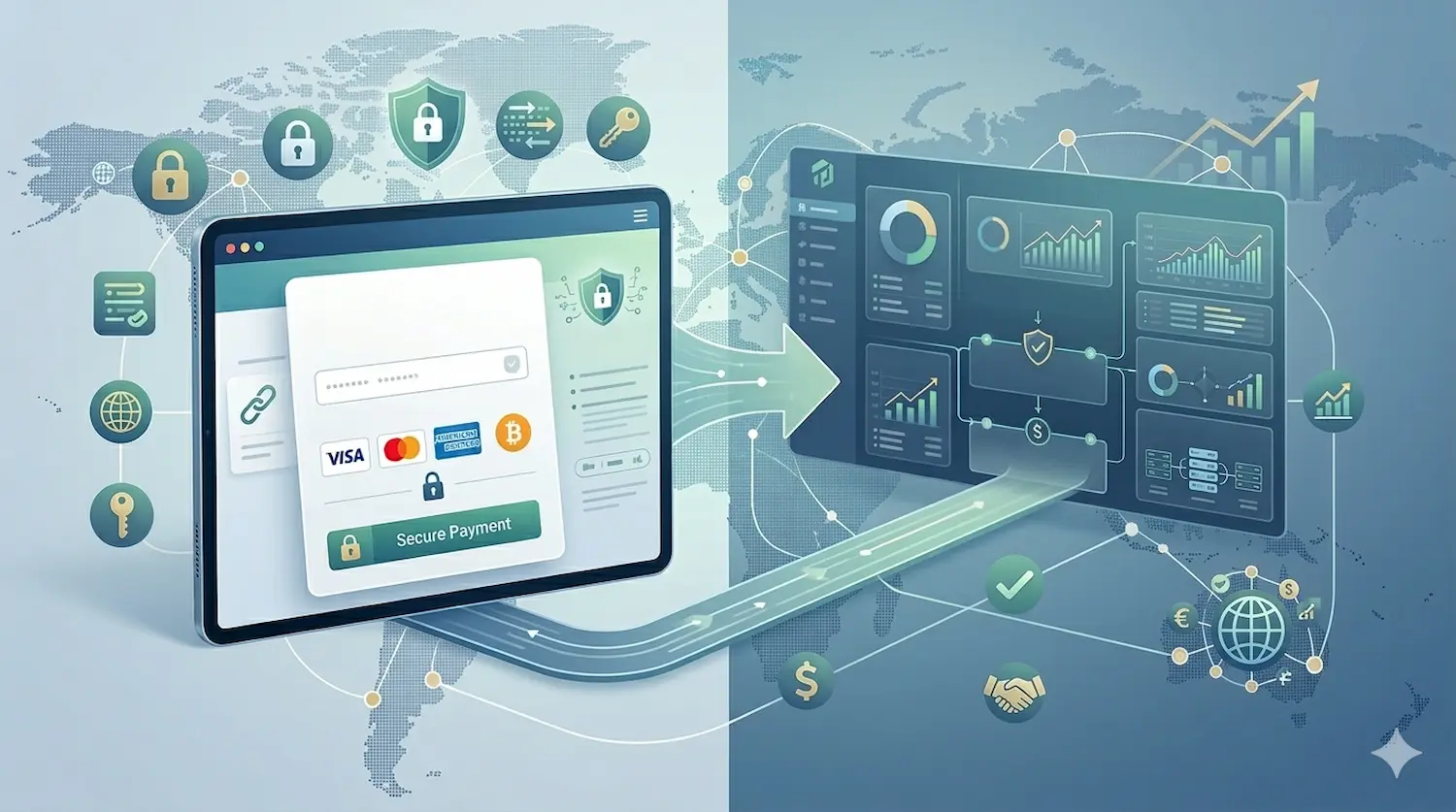
A customer chooses a payment method at checkout. The payment information is captured, routed through the relevant payment infrastructure, checked for approval, and then settled according to the provider’s process. When the transaction is cross-border, currency conversion, regional payment rules, and fraud screening can all play a bigger role.
For businesses, this means international payments are not only about whether a customer can pay. They are also about whether the payment can move smoothly from checkout to approval to settlement without creating unnecessary friction.
If you are also comparing the wider payment stack, this guide to payment gateway vs payment processor for high-risk businesses can help clarify which part of the setup handles what.
Why international payments matter for online businesses
For businesses selling beyond their home market, international payments are tied directly to growth.
A payment setup that works well domestically may not always perform the same way for overseas customers. Declines, unfamiliar payment options, hidden fees, limited currency support, and poor checkout localization can all hurt conversion.
A stronger international payment setup can help businesses:
- serve customers in more countries
- support more currencies
- reduce payment friction at checkout
- improve cross-border conversion
- create a more reliable global customer experience
This is especially relevant for merchants that operate in more complex verticals, where payment flexibility may also connect with broader high-risk payment gateways strategies.
Common challenges with international payments
International payments can create real opportunity, but they also come with additional complexity.
Currency conversion
When customers pay in one currency and merchants settle in another, foreign exchange can affect the final payment experience and the economics behind it.
Payment declines
Cross-border payments are more likely to trigger additional checks or be flagged differently than domestic ones. That can lead to more checkout friction if the payment setup is not well optimized.
Fees and transparency
International transactions may involve conversion costs, processing fees, or other operational charges depending on the payment model. Clear pricing and predictable settlement matter.
Fraud and compliance
International transactions can carry different risk signals, which is why fraud monitoring and verification become more important in cross-border payment flows.
Limited payment method choice
Not every market relies on the same payment behaviour. A business that only supports one or two familiar methods may struggle to convert customers in other regions.
The main ways businesses handle international payments
There is no single model for international payments. The right one depends on the business, the customer base, and the regions being served.
Card payments
Cards remain one of the most common methods for international ecommerce, especially when the checkout experience is fast and the payment provider supports cross-border acceptance well.
Bank-based transfers
For some use cases, bank transfers still play an important role, especially in larger transactions or B2B environments. But they may not offer the same speed or checkout convenience as other methods.
Local and alternative payment methods
In some markets, customers expect payment methods that are more familiar in their region. Supporting those methods can make international payments more accessible and more relevant to local users.
Crypto and stablecoin payments
For some businesses, especially those serving digital or cross-border audiences, crypto can add more flexibility to the payment mix. If that is part of your wider strategy, our guide to crypto payment companies offers a useful starting point.
What to look for in an international payment solution
When comparing providers, it helps to focus less on generic claims and more on practical fit.
Currency support
A good international payment setup should support the currencies your customers actually use and make settlement expectations clear.
Payment method flexibility
Different markets often prefer different ways to pay. The more relevant payment options a business can support, the easier it becomes to reduce friction across regions.
Checkout experience
International payments should not feel harder than domestic ones. A clean, clear, reliable checkout is a major part of cross-border conversion.
Fraud controls
Cross-border payments need thoughtful fraud protection without creating unnecessary friction for real customers. The goal is balance, not blanket restriction.
Settlement and operational clarity
Businesses need to understand how payments are settled, in which currencies, and on what terms. For some merchants, that also means understanding related issues such as rolling reserves for high-risk merchants.

Ease of implementation
A payment solution should be realistic for the business to launch and manage. Before moving ahead with any provider, it can help to review a high-risk payment gateway onboarding checklist to understand what may be needed during setup.
Why international payments are not just a checkout issue
It is easy to think of international payments as a front-end problem. But in reality, they affect much more than the checkout page.
They influence how a business enters new markets, how customers perceive trust at payment stage, how smoothly transactions move across borders, and how much operational effort is needed to manage settlement and payment performance.
That is also why some businesses link international payments to broader concerns like disputes and payment risk. If that applies to your sector, our guide on how to reduce chargebacks in high-risk industries can help connect the dots.
Where NiftiPay fits in this conversation
For businesses exploring more flexible international payment infrastructure, NiftiPay fits most naturally as part of the gateway layer.
NiftiPay supports businesses that want to accept crypto payments, card payments, and onramping through a simpler integration. In an international context, that matters because cross-border growth often requires more than one payment method and more than one way to serve customers across different regions.
This does not mean every business needs the same setup. But for merchants looking at international payments through the lens of flexibility, broader acceptance, and a more adaptable payment layer, NiftiPay is a relevant part of that conversation.
What to keep in mind before expanding internationally
International payments are not only about moving money across borders. They are about building a payment experience that works for customers in different markets without making operations harder for the business behind the scenes.
The best setup depends on what your business is trying to achieve. Some need more currencies. Some need more payment flexibility. Some need better cross-border support without rebuilding their entire checkout flow.
The key is to look beyond surface-level features and focus on fit: payment methods, settlement model, market reach, fraud controls, and implementation. For businesses that are ready to move from research into a more practical discussion, the NiftiPay New Client Service Request Form is a natural next step.
Leave a Reply