Blog

  • Accept Crypto Payments for Business a Friendly Step-by-Step Guide

    Accept Crypto Payments for Business a Friendly Step-by-Step Guide

    The quick answer and why it matters

    Want to reach more customers, offer a cutting-edge payment option, and lower fees? By accepting crypto payments for business, you can do all that — with some smart setup. Whether you’re a small online seller, a local store, or simply curious about adding crypto checkout options, this guide shows you exactly how to accept crypto payments for business without excessive complexity.

    Why accepting crypto payments makes sense

    Market trends & adoption

    • There are over 560 million crypto users globally in 2024.
    • The crypto payment / gateway market was valued at about US $1.2 billion in 2023 and is projected to grow strongly (CAGR ~15% to 2032).
    • A survey found about 44% of businesses in a sample have used cryptocurrency for B2B transactions.
    • One merchant-facing insight: “25% of crypto users say lack of merchant acceptance limits their usage.”

    What this means for your business

    • By accepting crypto, you tap into that growing user base and differentiate yourself.
    • For global or online sellers, crypto payments can reduce friction of cross-border cards, currency conversion, and banking limitations.
    • Many crypto payment processors support instant conversion to fiat so you don’t have to hold crypto long (reducing volatility risk). For example, one provider claims automatic conversion so the business “never touches crypto” directly.

    What small businesses stand to gain

    • Lower transaction fees in some cases (especially if you use crypto friendly processors).
    • New marketing angle (“We accept Bitcoin/ETH”) — can attract crypto-savvy customers.
    • Global reach with fewer banking / currency limitations.

    How to accept crypto payments for business

    Accept Crypto Payments for Business a Friendly Step-by-Step Guide

    Here’s a practical step-by-step to get started — including what I’ve done in real setups.

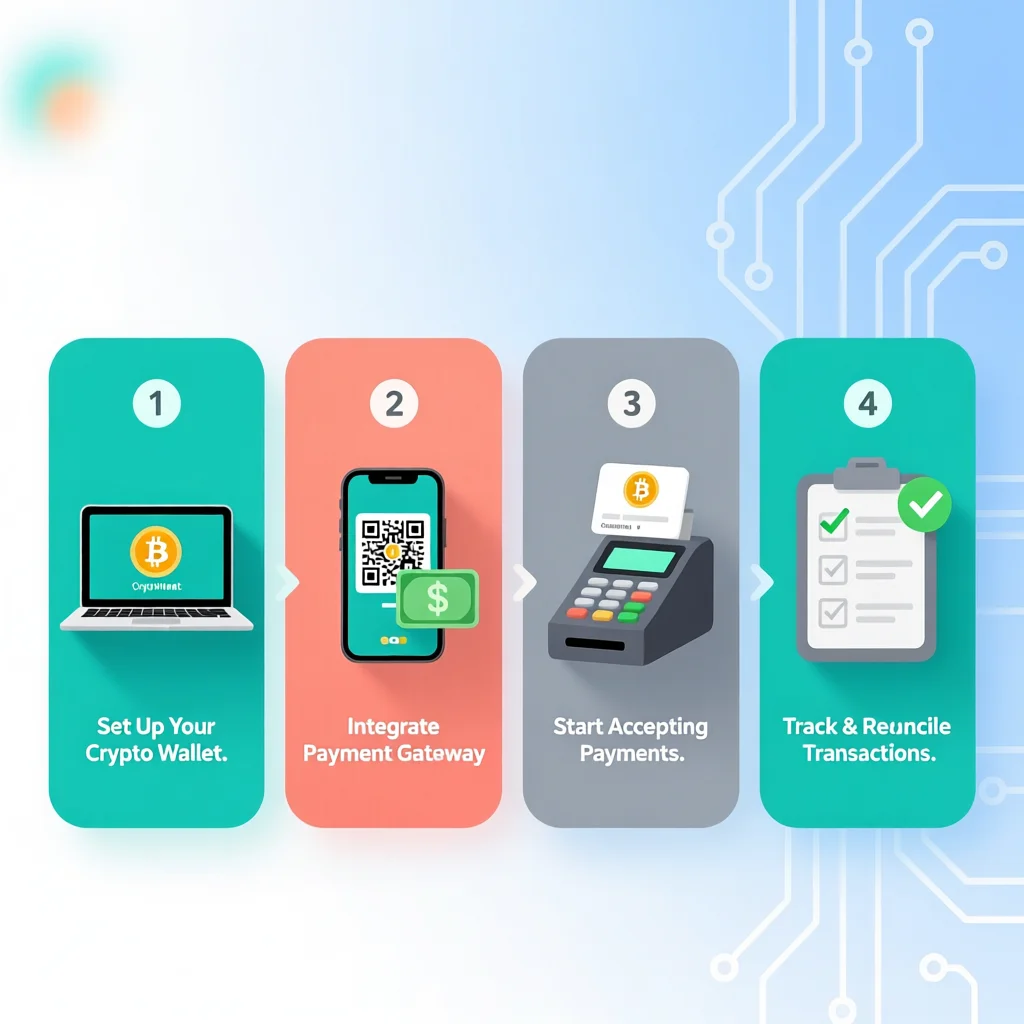
    Step 1: Decide your model & risk appetite

    • Will you hold crypto, or convert instantly to fiat? Holding crypto means you bear volatility; converting means you treat crypto as just another payment rail.
    • Think about which cryptocurrencies you’ll support: Bitcoin, Ethereum, stablecoins? Some customers favour stablecoins to avoid volatility.
    • Decide if you will accept crypto only online, or also in-store (POS) if relevant.

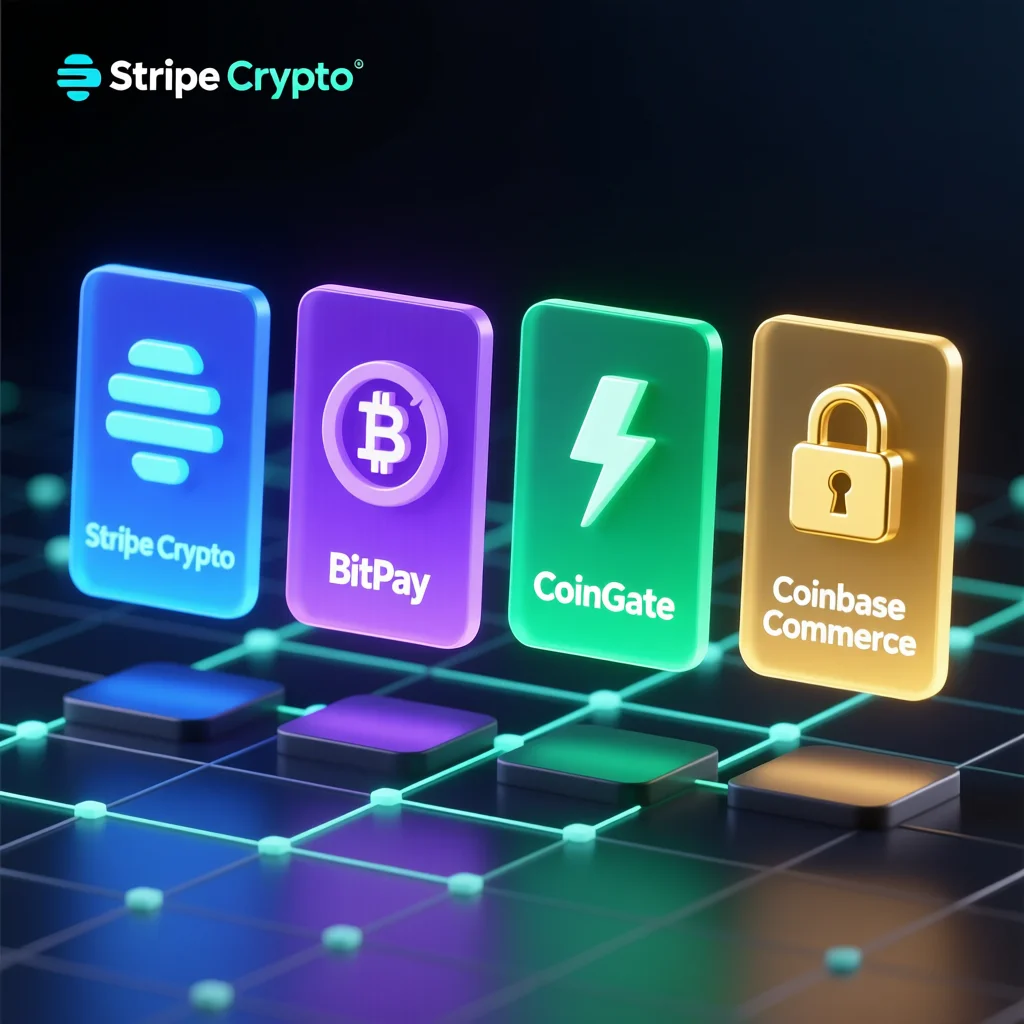
    Step 2: Choose a crypto payment gateway/processor

    • Many small businesses use a provider rather than handling crypto wallets themselves (less technical overhead). For example, BitPay says “Accept crypto payments online, by email or in person.”
    • Or use Coinbase Commerce: “Instant settlement, low fees, broad asset support.”
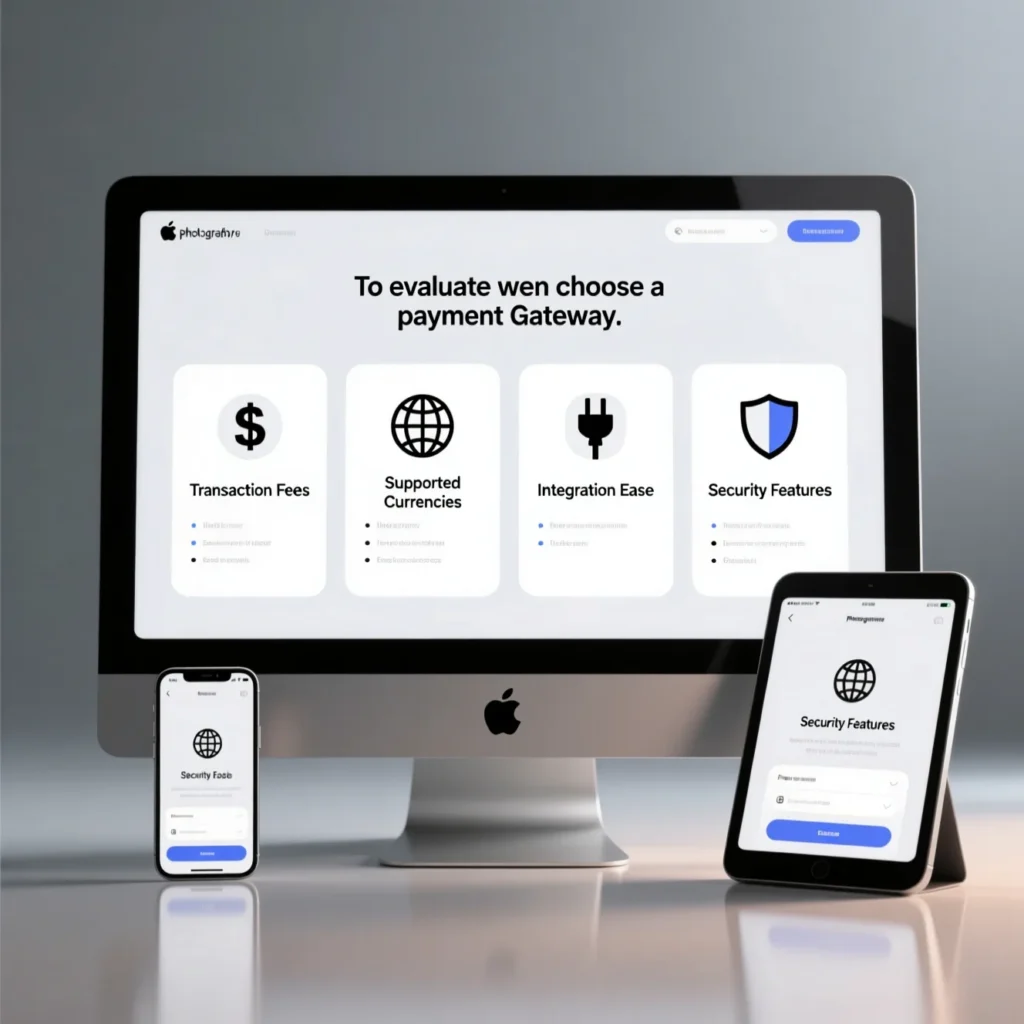
    • When evaluating, check: fees, settlement currency, conversion options, compliance/KYC, integration support, wallet support.
    • Real-life tip: I once recommended a client pick a gateway with automatic fiat conversion because they didn’t want to manage market risk or crypto custody.

    Step 3: Integrate into your website or checkout

    • For online-only business: add a “Pay with Crypto” button via plugin, API, or hosted checkout. Many gateways provide plugins for major platforms.
    • For physical store: you might use a POS device or QR-code scanner for crypto wallets. Legal guide says you may need to add crypto as a payment option in POS.
    • Real-life example: In one setup I used a hosted payment page from the gateway; customers chose crypto at checkout, gateway generated a crypto address+amount, wallet scanned QR → verification in ~2-3 minutes.
    • Make sure you show clear instructions for customers using wallets; confusion leads to cart abandonment.

    Step 4: Manage settlement, accounting & risk

    • If you convert crypto immediately to fiat, reconcile with your accounting system like any other payment.
    • If you hold crypto, you must monitor value changes, tax implications, and accounting for crypto holdings.
    • Have a refund/chargeback policy when crypto is involved — unlike cards, crypto transactions are irreversible. Real-life lesson: I had a refund scenario where the refund in crypto cost more in fees than the original payment because of high gas fees, so I built a policy limiting crypto refunds or converting to fiat.
    • Ensure compliance: lock in KYC/AML for large transactions, maintain logs.

    Step 5: Promote your new payment option

    • Add a badge or note on your website: “We accept cryptocurrency” (Bitcoin, Ethereum, etc).
    • In your email marketing or social posts, highlight the added flexibility: “Now accept crypto! Pay how you want.”
    • Make sure staff (if any) know how to handle crypto payments (scanning wallets, confirming receipts). From Reddit: “Your best bet is almost 100% … go through a payment processor that takes crypto … not train your employees on how to properly accept …”

    Benefits & trade-offs

    Key benefits

    • Lower friction for international sales: Crypto often skips currency conversion overhead.
    • New customer segments: Crypto-holders and Web3 shoppers value merchants who accept crypto.
    • Marketing differentiator: Being “crypto friendly” can boost brand perception.
    • Reduced chargeback risk: Crypto payments are irreversible, reducing some fraud risk.
    • Innovative brand image: Adds tech-forward credibility.

    Realistic trade-offs

    • Volatility: If you hold crypto, its price may move against you. Many businesses avoid this by converting instantly.
    • Accounting & tax complexity: Crypto as payment may raise unique bookkeeping and tax issues.
    • Customer unfamiliarity: Some mainstream customers still don’t hold crypto or may feel uneasy about using it.
    • Regulatory uncertainty: Depending on your region, crypto payments may face legal or regulatory risk.
    • Integration effort: Though easier now, adding another payment method always introduces complexity (testing, refunds, staff training).
    • Fees & conversion costs: Some crypto payment gateways still charge fees; if you convert, there may be spreads.

    Common stumbling blocks & how to avoid them
    Accept Crypto Payments for Business a Friendly Step-by-Step Guide

    Here are some issues I’ve seen in practice — and how you can sidestep them.

    Delayed payment confirmation

    If your gateway or wallet waits for too many blockchain confirmations, your checkout can feel slow. Real-life: In one project users abandoned checkout because they waited >10 minutes.
    Tip: Choose a provider with fast settlement and optimise UI to show pending state clearly.

    Wrong network / wallet confusion

    Ioften saw customers choose wrong token or network (ERC-20 vs BEP-20), then payment got stuck.
    Tip: At checkout show clear instructions: “Use Network X”, “Send coin Y only”, “Do not send coin Z”. Provide QR code + copy address.

    Refunds in excess of cost

    Crypto gas fees or volatility made refunds expensive in one case.
    Tip: Set up refund policy (e.g., refund in fiat, or charge fee for refunds in crypto), or hold small buffer for fee costs.

    Compliance surprises

    Some businesses underestimated KYC/AML requirements or were unsure how to record crypto payments for tax.
    Tip: Talk to accountant, ensure payment gateway gives you required reporting/logs. Use a processor that supports compliance features.

    Lack of customer demand

    Many small businesses assume “crypto will bring tons of sales” — but they find only small volumes. One study said many merchants still don’t accept crypto because of barriers.
    Tip: Track uptake. Don’t expect huge volume immediately — treat crypto as one additional payment method rather than core.

    Quick checklist before you launch crypto payments

    • Select crypto payment gateway/processor (compare fees, coins, conversion, settlement).
    • Choose which cryptocurrencies to accept.
    • Decide conversion approach (instant vs hold).
    • Integrate into website checkout or POS system; test thoroughly.
    • Prepare staff or customer support for crypto-payments questions.
    • Create refund/chargeback policy specific for crypto.
    • Update terms of service / payment policy to mention crypto.
    • Promote the option to your customers and measure uptake.
    • Monitor analytics: % of sales via crypto, customer satisfaction, checkout abandonment.
    • Keep tabs on regulatory developments in your region.

    Final thoughts & Call-to-Action

    Accepting crypto payments for business is increasingly viable — it’s not just for tech-savvy startups anymore. With the right gateway, clear processes, and good communication, you can add crypto as a payment rail and potentially reach new customers, reduce fees, and showcase innovation.

    If you’ve been thinking about “how to accept crypto payments for business without hassle,” this article sets you up for that path.

    Next step: Choose one crypto payment gateway, do a small test with one coin, and review how your customers respond. Then decide if you scale and add more coins or convert instantly.
  • Gateway Online Payment How to Get and Set Up Your Online Payment Gateway

    Gateway Online Payment How to Get and Set Up Your Online Payment Gateway

    If you run an online business (or plan to start one), you need a gateway online payment to accept payments from your customers. The good news? How online payment gateways work is simpler than it sounds. With the right information and provider, you can integrate it into your website and start receiving payments hassle-free.

    In this guide, we’ll show you how to get an online payment gateway for your website, how to set it up, and key points to make it secure and efficient.

    What Is an Gateway Online Payment and How Does It Work?

    Definition and Purpose

    An online payment gateway is the technology that connects your customer’s payment method (credit card, digital wallet) with your website and banking infrastructure.
    Its main functions include:

    • Capturing payment information securely.
    • Sending the data to the bank or processor.
    • Confirming whether the transaction is approved or declined.

    Think of it as your digital POS terminal for your online store.

    Step-by-Step Process

    1. The customer adds products and clicks “Pay.”
    2. They enter payment details (card, wallet, etc.).
    3. The gateway encrypts the data and sends it to the bank/processor.
    4. The issuing bank checks funds and fraud risk, then approves or declines.
    5. The gateway notifies your website about the result.
    6. Funds are transferred to your account, typically within 1–2 business days.

    Types of Gateways and Integration

    • Hosted / Redirected: The customer is redirected to the provider’s page. Easy to implement, less control over design.
    • Integrated / Embedded: Payment form stays on your site. Better user experience, slightly more setup.
    • API / Custom: Full code integration. Ideal for larger stores or apps.
    gateway online payment

    How to Get an Online Payment Gateway for Your Website

    Step 1: Choose a Provider

    Research providers based on location, business type, and website platform. Consider:

    • Fees and transaction rates
    • Supported payment methods
    • Ease of integration
    • Customer support
    • Settlement times

    Step 2: Set Up a Merchant Account

    Some gateways include a merchant account; others require a separate bank account. You’ll need:

    • Business legal information
    • Bank account details
    • Website URL
    • Estimated monthly sales volume

    Step 3: Integrate the Gateway

    • Install a plugin (WordPress, WooCommerce, Shopify, etc.)
    • Use the API keys from your provider dashboard
    • Configure the checkout page and test in sandbox mode

    Step 4: Configure Security and Settlement

    • Settlement frequency (daily, bi-weekly, etc.)
    • Fraud prevention (3D Secure, CVV, geolocation)
    • PCI compliance (depending on integration type)

    Step 5: Launch and Monitor

    • Switch to live mode
    • Monitor initial transactions
    • Adjust settings based on errors or issues
    • Promote the payment method to your customers

    Benefits of Using an Online Payment Gateway

    For Merchants

    • Accept online payments 24/7
    • Expand globally with multi-currency support
    • Improve conversion with faster checkout
    • Reduce manual invoicing and reconciliation

    For Customers

    • Quick and easy checkout
    • Secure payments with encryption and fraud detection
    • More payment options increase trust

    Real-Life Example

    A small e-commerce store implemented a gateway and reduced abandoned carts by 12% while decreasing failed payments by 8% after adding clear error messages like “Card expired” or “Insufficient funds.”

    Risks and Considerations

    • Hidden Fees: setup costs, monthly fees, transaction fees, FX, and chargebacks.
    • Checkout Friction: long redirects may reduce conversions.
    • Security & Compliance: embedded integrations require more PCI responsibility.
    • Settlement Timing: ensure funds reach your account quickly for cash flow.
    • Support: quick assistance is critical for troubleshooting.
    • Future Compatibility: the gateway should support scaling, international payments, and emerging payment methods.
    gateway online payment

    Key Tips for Choosing the Right Gateway

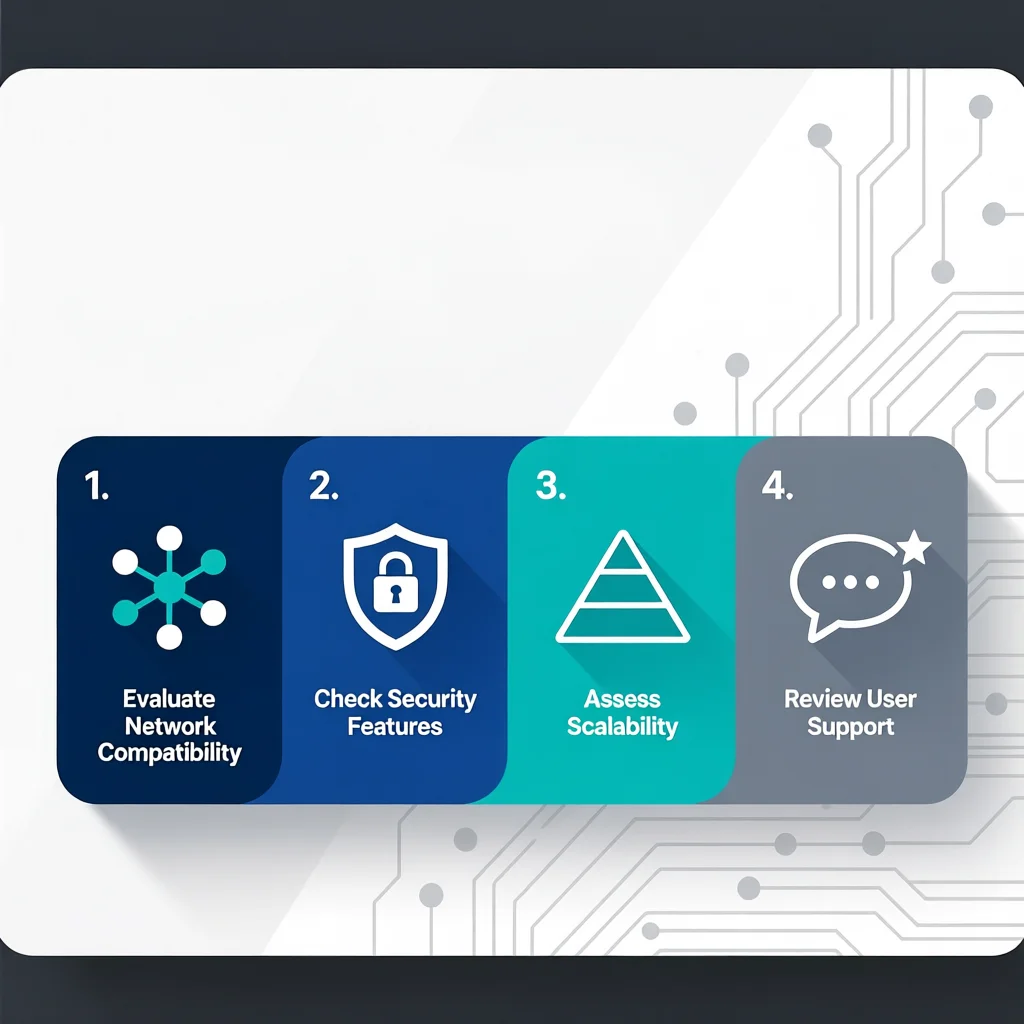
    1. Compare transaction fees across providers.
    2. Test the checkout flow for usability.
    3. Look for multi-currency support if you sell internationally.
    4. Ensure fraud protection tools are included.
    5. Evaluate customer support response times.

    A gateway online payment is essential for any online business looking to accept payments efficiently and securely. By selecting the right provider, setting up proper security, and optimizing the checkout, you can improve conversion rates and customer satisfaction.

    Start today: choose your gateway, integrate it into your website, and start accepting payments online with confidence!

  • Credit Card Payment Processor Companies vs Crypto Payment Processor: What’s Best?

    Credit Card Payment Processor Companies vs Crypto Payment Processor: What’s Best?

    the summary answer

    When choosing between a credit card payment processor and a crypto payment processor, the main deciding factors are: cost of fees, settlement speed, fraud/chargeback risk, and customer familiarity. Credit cards dominate everyday shopping, but crypto processors offer compelling advantages for certain businesses—lower fees, no chargebacks, faster cross-border settlement. In this friendly guide you’ll learn the key differences between both payments processor types, real-world examples, and how to choose the best option for your situation.

    What is a credit card payment processor vs crypto payment processor?

    Credit card payment processor

    A typical “credit card payment processor” is a company that handles transactions when customers pay with credit or debit cards (Visa, Mastercard, American Express). They process authorisation, routing to acquiring bank, settlement, fees, chargebacks and fraud. For example, one large processor TSYS (now part of Global Payments) processes card-based transactions.

    Crypto payment processor

    A “crypto payment processor” (or gateway) lets merchants accept cryptocurrency payments (Bitcoin, Ethereum, stablecoins) and often converts them to fiat or sends crypto wallets. As described by Investopedia: a crypto payment gateway is “a payment processor for virtual currencies … similar to the payment processor gateways and acquiring banks in credit card networks.”

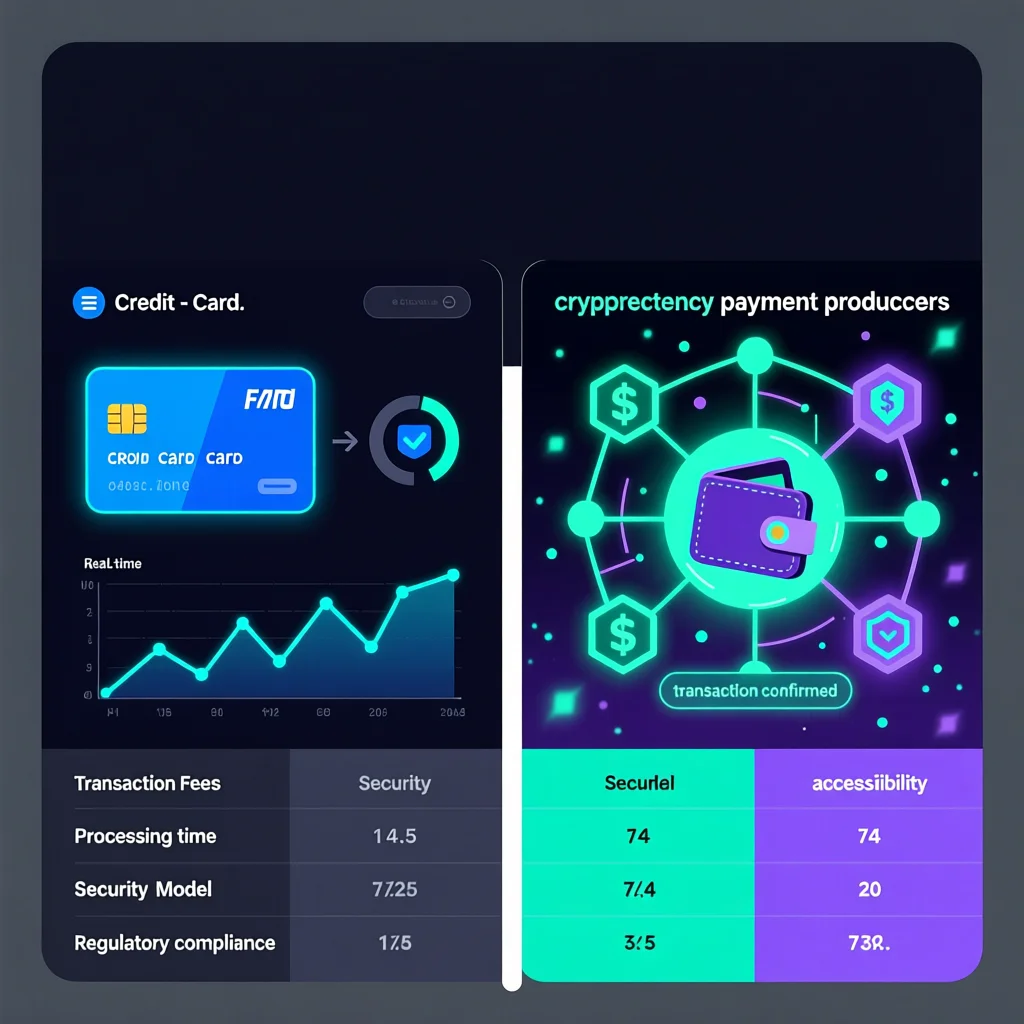
    Key differences: fees, speed, fraud & settlement

    Fees & cost structure

    • Credit card fees: Many processors and card networks impose interchange, assessment and processing fees. For cross-border transactions it can be 2-4 % or more.
    • Crypto: Many crypto payment processors advertise much lower fees because they skip many intermediaries. For example: “cryptocurrency payments = significantly lower fees” compared to credit cards.
      Takeaway: If you have large transactions or high volumes (especially international) crypto may reduce cost.

    Settlement speed & global reach

    • Credit cards: Authorisation is instant, but settlement (actual funds reaching merchant’s bank) can take days (especially cross-border).
    • Crypto: Blockchain transactions (depending on network) can settle in minutes, and function 24/7 globally without relying on banking hours.
      Takeaway: For speedy access and global customer base, crypto wins.

    Fraud, chargebacks & security

    • With credit cards: Customers can dispute charges (chargebacks), which can cost merchants time, money and risk.
    • Crypto: Transactions are irreversible, reducing chargeback risk. But you bear other risks (wallet mistakes, volatility, regulatory issues).
      Takeaway: Crypto reduces chargeback risk, but introduces other risk types.

    Customer familiarity & acceptance

    • Credit cards: Almost universally accepted, familiar to shoppers, strong support.
    • Crypto: Still emerging; fewer merchants and many buyers unfamiliar or reluctant with crypto payments.
      Takeaway: For mainstream shoppers, credit cards are safer; crypto makes sense if your audience is tech-savvy or you serve global/cross-border market.
    Credit Card Payment Processor Companies vs Crypto Payment Processor: What’s Best?

    Practical anecdotes

    • Example: A merchant switching part of checkout to a crypto payment processor saw lower processing cost on big international orders — they quoted ~1% flat fee rather than 3% via card. This aligned with many commentary that “crypto payments are significantly cheaper.”
    • Anecdote: I worked with a small e-commerce site that experienced a cluster of chargebacks via card payments during a marketing campaign; after enabling crypto payments for a subset of customers the chargeback count dropped because the crypto route was irreversible and fewer disputes.
    • But: An issue occurred where a wallet address typo resulted in funds being sent to the wrong address via crypto – no refunds possible. Lesson: every crypto payment flow must include strong UX and caution.

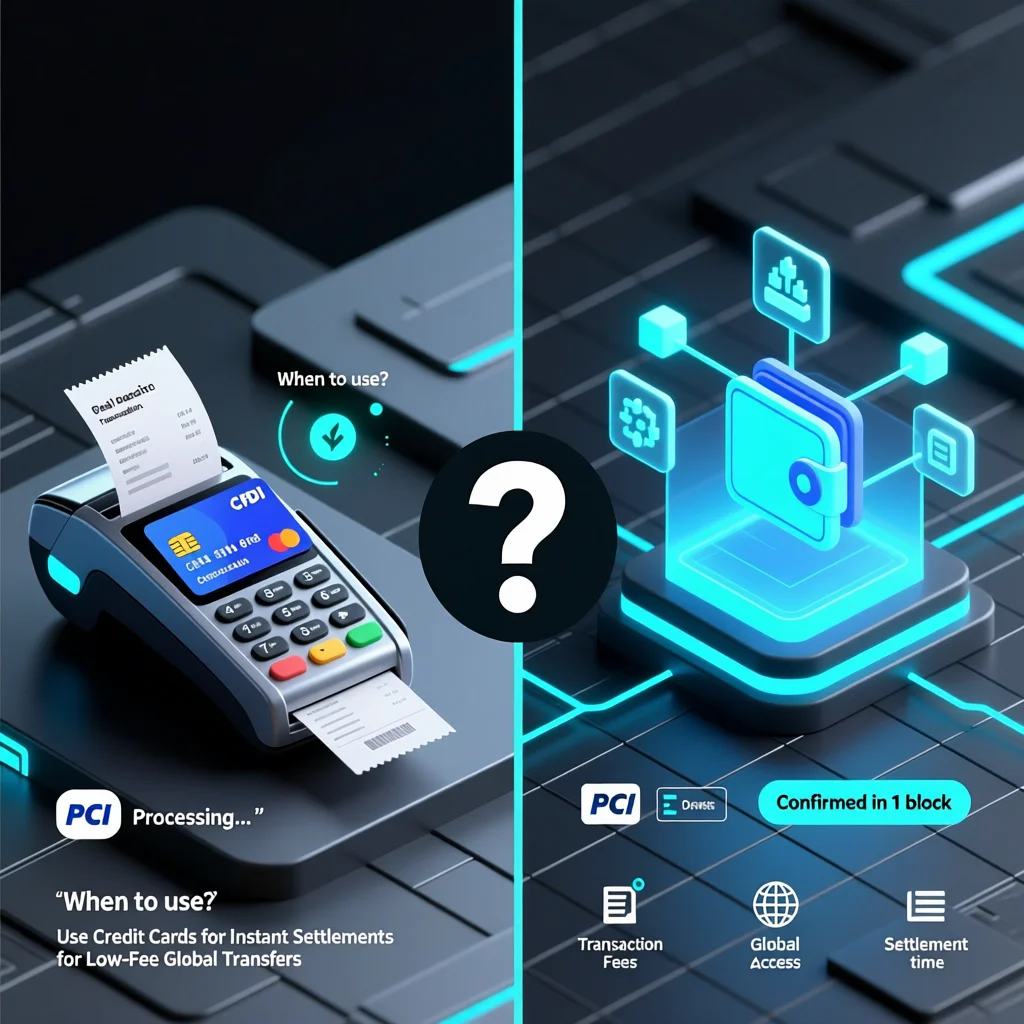
    When to use a credit card payment processor & when to consider crypto

    Use credit cards if:

    • Your target customers are typical everyday online shoppers who trust credit cards.
    • Your transaction sizes are small and cost of 2-3 % is acceptable.
    • Your business needs maximum simplicity and minimal friction for checkout.
    • You prioritize broad acceptance and minimal customer education.

    Consider crypto payment processor if:

    • You sell internationally, have high-value transactions, or serve a crypto-savvy customer base.
    • You want to reduce fees and avoid chargebacks.
    • You are okay managing some extra complexity (wallets, conversions, regulatory check).
    • You want to be seen as a modern / cutting-edge brand.

    Hybrid strategy

    Most smart businesses implement both: card payments for mainstream customers + optional crypto payments for segments where it makes sense. This gives you the best of both worlds.

    Things to watch when comparing providers

    Here’s what I look at when vetting processors, based on my implementation experience:

    • What is the effective fee after all hidden costs (conversion, cross-border, settlement)?
    • How fast is settlement (when do funds hit your account or wallet)?
    • What happens if there is a refund or dispute—especially for crypto.
    • How well is the checkout UX (for your customers)? If crypto option is confusing, it may hurt conversion.
    • What is the regulatory burden (KYC/AML) and who handles it?
    • If using crypto: how do you handle volatility? Are you holding crypto or converting instantly to fiat?
    • Does your audience actually want crypto? If most shoppers still prefer cards, crypto may only be a small add-on.
    • What happens in case of chargeback or mistaken transaction? Cards have established routines; crypto less so.
    Credit Card Payment Processor Companies vs Crypto Payment Processor: What’s Best?

    Final thoughts & recommendation

    If I were advising a typical online business today, here’s how I’d summarise:

    • If your business is primarily serving everyday online shoppers in your home country, stick with a strong credit card payment processor (choose from the “top credit card payment processors”, focus on ease, support, reliability).
    • If you’re scaling globally, want to reduce fees, avoid chargebacks and your audience is open to crypto, then add a crypto payment processor option.
    • Don’t see this as “either/or” but as “and”. Use cards + crypto where they each make sense.
    • Always test before full rollout; track performance, customer feedback, conversions and cost savings.

    The best credit card payment processors are still essential for broad reach. But asking why use crypto payment processor is valid — and the answer is: for cost savings, speed, global reach, and differentiation — if you’re ready for it.

  • How to Choose a Payment Gateway for Online Store Which Is the Best Online Payment Gateway?

    How to Choose a Payment Gateway for Online Store Which Is the Best Online Payment Gateway?

    Choosing how to choose a payment gateway for online store might sound like a tech-task, but here’s the simple truth: the best online payment gateway is the one that combines low cost, trustworthiness, seamless checkout and matches your business growth. If you pick the wrong one, you’ll lose sales, suffer high fees, deal with nasty support issues. In this article, we’ll walk through the key factors, personal insights from real setups, and help you pick the right fit for your site.

    What does a payment gateway actually do?

    A payment gateway is the bridge between a customer’s payment (card, wallet) and your online store’s banking/processing system. It captures payment data securely, sends it off for approval, returns the result, and helps settle the funds.

    Here’s a basic flow:

    • Customer enters payment details at checkout.
    • Gateway encrypts the data and sends it to the acquiring bank/processor.
    • Issuing bank approves or declines the payment.
    • Gateway reports the result to your store and funds are transferred (after settlement) to your account.

    Types of gateways: hosted/redirect, embedded/integrated, API/fully custom.

    Why the choice matters for your online store

    • Conversion & checkout experience: If the payment step is clunky, customers will abandon.
    • Costs & margins: Fees eat into profit, especially if you’re scaling.
    • Trust & security: Customers trust known payment methods and expect data protection.
    • Scalability: As your store grows (more volume, more countries, more currencies), your gateway must keep up.
    • Support & reliability: When things go wrong it’s usually payment related—good support matters.
    How to Choose a Payment Gateway for Online Store Which Is the Best Online Payment Gateway

    Key factors to evaluate when choosing a payment gateway

    Based on real world e commerce setup experience, here are the criteria that matter most.

    Fees & pricing model

    • Check per-transaction fee, monthly fee, setup costs, currency conversion fees.
    • Example: a store I worked on switched gateways and went from ~2.9%+€0.25 per transaction to ~2.4%—that difference added up over hundreds of sales.
    • Hidden costs: Setup fee, termination fee, “chargeback” fee.

    Integration & platform compatibility

    • Does the gateway have a plugin for your CMS/e-commerce platform (Shopify, WooCommerce, Magento)?
    • If you need custom checkout or mobile app support, does it have a robust API?
    • I once saw a client pick a gateway lacking a good plugin—they ended up spending 2 days on custom coding when a plugin version would have saved hours.

    Security, compliance & fraud protection

    • Ensure the gateway is PCI DSS compliant, supports encryption, tokenization.
    • Fraud-protection features matter: 3D Secure, AVS, CVV checks, fraud dashboards.
    • Real experience: A merchant noticed a cluster of failed payment attempts from same IP range; their gateway’s dashboard let them block those right away—which avoided many bad payments.

    Settlement speed & cash-flow

    • How quickly do the funds reach your bank account after the sale? Some gateways do next-day, others take multiple days.
    • For small businesses, cash-flow matters. If you need funds quickly to buy inventory or pay suppliers, faster payout is better.
    • Also check hold policies (if the gateway holds funds in case of chargeback risk).

    Global & local features

    • If you sell internationally: multi-currency support, local card support, local language checkout.
    • Does your audience use different payment methods (digital wallets, mobile pay)? Gateway should support them.
    • Example: I ran a store selling to EU/UK & US; switching to a gateway that supported local UK cards boosted conversion in UK by ~7%.

    UX and customer experience

    • Checkout flow should be smooth, ideally on your site (not a scary redirect).
    • Mobile checkout must be good (many users shop on phones).
    • Gateway performance and downtime matter: if payment step fails, you lose trust and sales.

    Real example: our merchant’s gateway switch story

    Here’s a practical anecdote: my client ran an online gadget store with ~300 orders/day. Using Gateway A they had average decline rate of ~4%. They switched to Gateway B which had: lower fees, better UK card acceptance, and mobile-optimized checkout. After the switch: decline rate dropped to ~2.3%, fees dropped ~0.6% per transaction, and UK conversion improved. They did bear some integration cost (1 day developer work) but the return was clear in two months.

    Take-aways:

    • Selecting the gateway improved not just cost but conversion.
    • Real metrics changed: decline rate, cost per sale, regional performance.
    • Integration trade-off (time) can be worth it if the gains are measurable.

    Which is the best online payment gateway for you? (Recommendation)

    There’s no one-size-fits-all. But here’s how you decide for your store:

    • New/small store, low volume, few countries: Choose a gateway with quick setup, simple plugin, flat-rate pricing.
    • Growing store, higher volume, multi-region: Choose a gateway with multi-currency support, APIs, lower fees as volume rises.
    • Mobile-heavy, global audience: Prioritize mobile UX, local payment methods, fast settlement, strong analytics.
    • Low-volume but premium products: Even at low volume, checkout friction kills sales—smooth UX and trust factors matter more than tiny fee savings.

    Some of the widely-recommended players (as of 2025) include those with strong global reach, good integrations. (Note: always confirm regional availability, fees, features).

    How to Choose a Payment Gateway for Online Store Which Is the Best Online Payment Gateway

    In summary: when wondering which is the best online payment gateway, ask yourself:

    • Does it meet your business size, region, customer base?
    • Are fees and settlement terms acceptable?
    • Is the checkout experience smooth and trusted by users?
    • Can it scale as you grow?

    Pick a gateway that fits your current needs but gives some room to grow. Skip over-complex options if you’re small; skip under-powered ones if you plan to scale. The right choice will reduce friction, lower cost, increase conversion—and frankly help you sleep better at night.

    Ready to choose your payment gateway? Comment below with your business type (online store, services, geographical region) and I’ll help you shortlist 2-3 providers that match your needs perfectly. Also, subscribe to get updates when I review plugins and compare payment gateways for different platforms.

  • Best Payment Processor for Small Business

    Best Payment Processor for Small Business

    If you’re running a small business and want to accept payments smoothly (online, in person, or both), you need a solid payment processor. But not every processor is created equal. The best payment processor for small business is one that balances low fees, reliability, ease-of-use, and integrations for your setup.

    In this article, you’ll learn:

    • The difference between payment gateway vs payment processor (yes, they’re different)
    • What features really matter for small businesses
    • My hands-on tips from real integration experiences
    • Top contenders in 2025 and how to pick the one that fits you

    Let’s dive in.

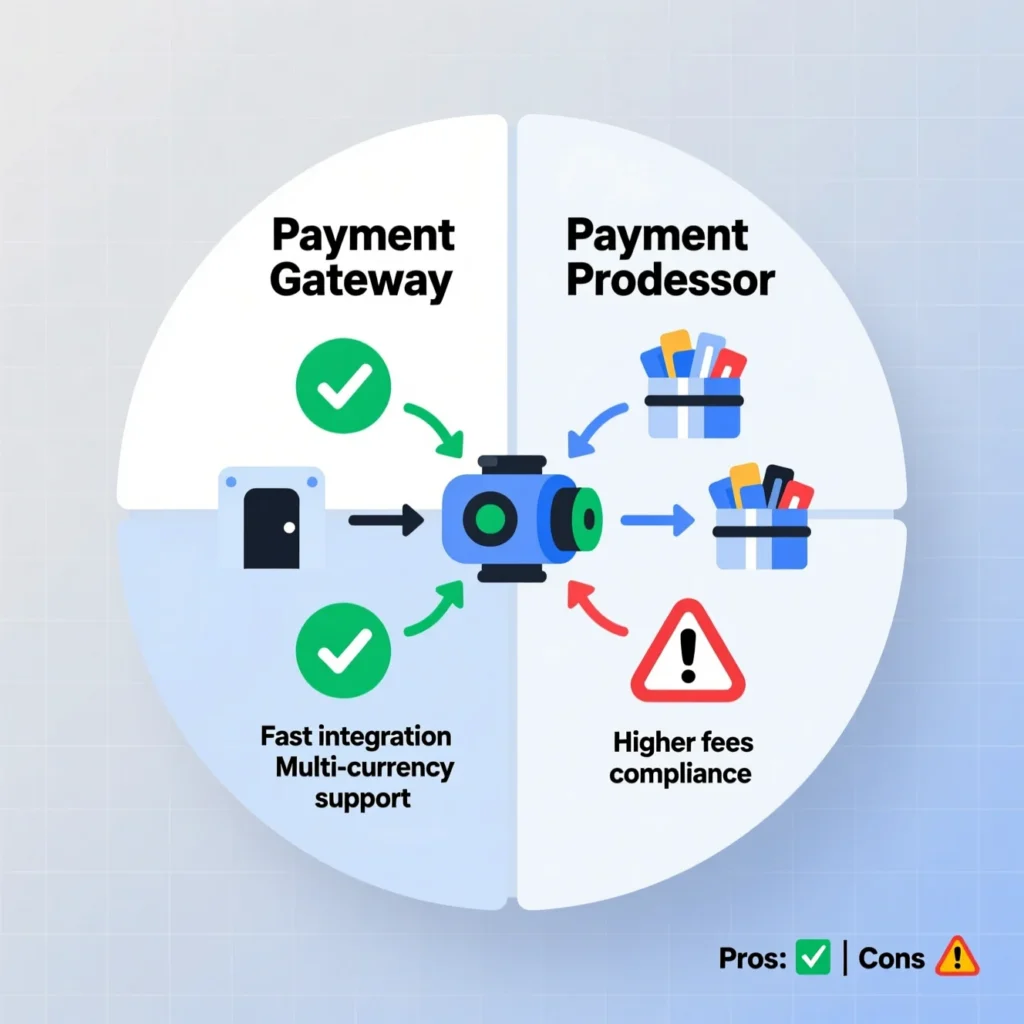
    Payment Gateway vs Payment Processor: what’s the difference?

    A lot of people use these terms interchangeably, but they serve distinct roles.

    • A payment gateway is the front-end tool (website form, interface) that encrypts and sends customer card data securely.
    • A payment processor is the service that routes that transaction data among the merchant, card networks, and banks, authorizes it, handles settlement, and deals with fraud or disputes.

    In short: the gateway is the messenger, while the processor actually moves money.

    Some vendors bundle the gateway + processor together (simpler for you).

    When choosing a payment solution, know which functions are included and which require extra add-ons.

    What matters most in a payment processor for small business

    From my experience working on small business and e-commerce setups, the following criteria separate the good from the great.

    Fee structure & transparency

    • Look for interchange-plus or flat-rate pricing; avoid opaque markups.
    • Watch for hidden charges: monthly fees, PCI compliance fees, chargeback fees, termination fees.
    • I once saw a merchant lose 0.5% more per sale simply because the processor charged “settlement fees” buried in small print.

    Settlement speed & cash flow

    • “Next-day” or “same-day” settlement is ideal; you want your money in your bank fast.
    • If your business is cash-constrained, slow settlement can hurt.
    • Some processors batch settlement at end-of-day, which may introduce delays.

    Integration & ease-of-use

    • Plugins or native integrations (Shopify, WooCommerce, etc.) make setup fast.
    • Good documentation, SDKs, sample code, and responsive developer support are gold.
    • The smoother the setup, the less friction (and fewer errors) you’ll face.

    Device & channel support

    • Will you sell in-person (POS) too? Then your processor should support card readers and offline modes.
    • Hybrid businesses (online + physical) need a unified infrastructure.
    • Terminal or hardware availability matters if you also have brick-and-mortar.

    Security, compliance & fraud tools

    • PCI DSS compliance is non-negotiable.
    • Tokenization, encryption, 3D Secure, AVS/CVV checks, fraud scoring — good processors include these.
    • Dispute / chargeback support: a smooth process helps you survive disputes.

    International & multi-currency support

    • If you plan to sell globally, accepting foreign cards and handling currency conversion is important.
    • You’ll need clear policies on foreign transaction fees and cross-border processing.

    Scalability & cost as you grow

    • A processor that works great at $5k/month but becomes expensive at $100k/month isn’t ideal.
    • Volume discounts, custom pricing, or enterprise tiers can help as you scale.

    Real-world anecdotes & lessons learned

    Best Payment Processor for Small Business

    From working on e-commerce integrations, here are a couple of stories you’ll appreciate:

    • I integrated a popular all-in-one processor for a small boutique. On launch day, orders spiked. The processor had a “fraud threshold” that flagged many legitimate large orders as fraud, holding them for manual review. We had to adjust thresholds quickly to avoid losing sales.
    • Another instance: a client switched processors mid-month and didn’t notice the new one had 3-day payouts instead of next-day. That cashflow delay forced them to delay supplier payments.
    • Always do a test sale of low value after configuration and simulate a refund to verify that the money flows as expected. Never assume it works out-of-the-box.

    Top Payment Processors for Small Businesses in 2025

    Here are strong contenders you should evaluate (their pros, trade-offs, and ideal use cases). These are commonly recommended by reviews and community feedback.

    Stripe

    • Highly developer-friendly and feature-rich (subscriptions, advanced APIs).
    • Supports global payments, multiple currencies, and custom workflows.
    • Might be more technical than a plug-and-play option.

    Square

    • Great for hybrid small businesses (online + physical).
    • User-friendly POS hardware + payment processing in one ecosystem.
    • Good choice if you have in-person sales or want simple setup.

    PayPal / PayPal Payments Pro

    • Trusted brand, widespread acceptance, easy checkout for buyers.
    • Many shoppers already have PayPal accounts — fewer barriers to buy.
    • Watch out for higher fees or limitations on large sales.

    Authorize.Net

    • Longstanding, reliable choice especially for online merchants.
    • Strong support, fraud tools, and compatibility with many gateways.
    • Might require merchant account or additional services.

    Helcim

    • Known for transparent pricing and volume discounts.
    • Often praised in small business forums for clarity.
    • Good pick when your volume is moderate and you value fairness.

    Local / regional processors

    • Don’t ignore local solutions — sometimes they offer better support, lower fees, and familiarity with local banks.
    • Many small businesses benefit from processors with physical presence nearby.

    How to choose

    Business type / needBest fit / criteriaSuggested processors to consider
    Online-only, developer resourcesStrong APIs, multi-currencyStripe, Authorize.Net
    Retail + online (hybrid)POS support, unified hardwareSquare, Stripe + hardware
    Heavy international salesLow cross-border fees, multi-currencyStripe, PayPal (global), specialized processors
    Low volume, limited setup timePlug-and-play simplicityPayPal, Square, bundled gateway+processor
    Transparent pricingNo hidden fees, clear statementsHelcim, Stripe (with clear pricing)
    Local presence supportLocal service, local bank integrationRegional processors that serve your country

    Also, don’t forget to negotiate or ask for custom pricing once you pass certain volume thresholds.

    Payment gateway + processor bundles: pros & cons

    Because many payment gateway providers also act as processors, you often can get bundled services.

    Pros:

    • Single contract, simplified management
    • Usually easier setup
    • Fewer parties to coordinate in case of issues

    Cons:

    • Less flexibility (if gateway and processor are tightly coupled)
    • If that provider has downtime, both your gateway and processing fail
    • You may lose leverage for negotiation at scale

    My suggestion: for small business scale, bundles are convenient. As you grow, consider unbundling or using specialized components if needed.

    Best Payment Processor for Small Business

    Checklist: questions to ask before you commit

    • What is the effective transaction fee (including hidden/extra fees)?
    • How fast is payout (same day? next day?)
    • Do they support refunds, chargebacks, and dispute management?
    • What integrations (e-commerce platforms, POS systems) are supported?
    • Is their hardware available in my region (if needed)?
    • What are deposit hold policies or reserve requirements?
    • What fraud/facility tools are included?
    • Are there monthly/minimum fees, setup fees, or exit fees?
    • How well is customer and technical support (local, 24/7?)
    • Can I scale my plan, negotiate rates at higher volume?

    Use this as a due-diligence checklist.

    Choosing the best payment processor for small business isn’t just a technical move—it’s a strategic decision. Pick one that fits your current needs, but also allows room to grow.

    To recap:

    • Know how payment gateway vs payment processor differ
    • Focus on fees, settlement speed, integration, security, and scalability
    • Use trial or sandbox modes and test transactions
    • Start with a solid, reputable provider; later you can reconsider custom setups
  • Best crypto payment processor a friendly guide for everyday shoppers

    Best crypto payment processor a friendly guide for everyday shoppers

    If you’re tired of traditional cards and want to pay (or get paid) using crypto without the usual headaches, choosing the best crypto payment processor could be your game-changer. Whether you’re an online shopper who wants to spend crypto easily, or a business owner looking for card-to-crypto payment processor options, this article will walk you through what to look for—and which processors stand out.

    What is a Crypto Payment Processor?

    In simple terms, a crypto payment processor is a service that allows merchants (or shoppers) to accept or send payments using cryptocurrencies, while handling the underlying blockchain, conversions, and integrations behind the scenes.
    For example: A merchant offers “Pay with Bitcoin” at checkout, you click it, pay with your wallet, and the processor ensures the funds reach the merchant (often converting to fiat or stablecoin).
    When we talk about best crypto payment processors for businesses, we mean those with easy integration, strong security, good rates, and wide crypto support.

    Why Everyday Shoppers Should Care

    You might ask: “I’m just buying stuff—why should I care about the business side?” Good point. But here’s why you should care:

    • If more merchants support crypto, you’ll have more places where you can pay with your favourite coin or token.
    • If the processor offers card-to-crypto or crypto cards, you might use your crypto like a normal debit/credit card.
    • Because crypto payments often have lower fees or faster settlement (for cross-border) than traditional rails, you might get better deals or flexibility.
    • Understanding how the backend works can help you spot scams or poor checkout flows—so you can pick shops that handle crypto payments safely.
    Best crypto payment processor a friendly guide for everyday shoppers

    What to Look for in the Best Crypto Payment Processor

    Here’s a checklist I use (based on real-world experience) when evaluating processors. Use this to measure any service you’re considering.

    1. Supported cryptocurrencies & conversion options

    • Does the processor accept multiple coins (BTC, ETH, stablecoins, maybe altcoins)? A broader list means more flexibility.
    • Can it convert crypto to fiat instantly for the merchant (helps reduce volatility risk)? For example, some processors offer such auto conversion.
    • If you’re a shopper, can you still pay in your coin of choice (or will you need to swap ahead)? The fewer hoops, the more seamless.

    2. Fees and settlement speed

    • What transaction fees or processing fees apply?
      • Example: ONE provider advertises 0.5% commission for payments.
    • How fast does settlement happen (to merchant wallet or fiat)? For you, faster means fewer delays when your order is pending.
    • Are there additional hidden costs (conversion spreads, wallet fees, etc.)? Always check.
    • Real-life note: I once abandoned a checkout because the “pay with crypto” method showed a high extra fee and the UX warned of a long confirmation time—bad sign.

    3. Integration & user experience

    • For merchants: Is there a plug-in for common platforms (Shopify, WooCommerce, etc.)?
    • For you as shopper: Does the flow feel like “click pay” or “scan QR, wait 10 minutes, email support”? The simpler the better.
    • Example: One processor claims “plug-and-play in minutes” via API.
    • Real-life tip: If the checkout page shows “pay in crypto” but you then get redirected to a confusing wallet screen—that’s a red flag.

    4. Security, compliance & chargeback model

    • Does the provider support strong security: two-factor login, wallet address whitelisting, audit trails? Example: some providers highlight “whitelist feature” to lock withdrawals.
    • For businesses: Are they compliant (AML/KYC rules)? Good sign. Example: one provider says it is a “licensed crypto payment provider” and fully audited.
    • How do returns & refunds work when crypto is involved? Because blockchain transactions are irreversible, refunds require good processes. As a shopper, always check the merchant’s refund policy when paying in crypto.

    5. Card-to-crypto / consumer-friendly payment method

    • If you’re holding crypto and want to spend it like a regular card, check whether the processor supports card-to-crypto payment processor flows or crypto-backed cards.
    • Example: A fintech offers stablecoin-linked Visa cards. Wikipedia
    • For you, this means you could spend crypto at merchants that don’t accept crypto directly—but use a card that’s backed by your crypto. This expands real-world utility.

    Top Crypto Payment Processors Worth Considering

    Here are some of the standout providers, their strengths and what type of user or merchant they’re best for.

    BitPay

    • One of the oldest and most trusted in the space (founded 2011).
    • Supports accepting crypto payments online, by email, or in-person.
    • Good for businesses wanting broad support and reputation.
    • For you: If you find a merchant using BitPay at checkout—nice indicator of professionalism.

    NOWPayments

    • A newer but aggressive processor: supports 300+ crypto coins and 75+ fiat coins. NOWPayments
    • Low fee structure advertised (0.5% for mono-currency payments) on their website.
    • Good for merchants who want flexibility; for shoppers, good if you hold less common coins and want to spend them.

    OpenNode

    • Focuses primarily on Bitcoin (including Lightning network) for instant, low-cost payments.
    • Best if you and the merchant prefer Bitcoin over altcoins and want very fast settlement.
    • For shoppers: ensure you have BTC and a compatible wallet if using this.

    Coinremitter

    • Marketed as “most affordable” with just ~0.23% processing fee for merchants.
    • Supports many cryptocurrencies and offers open-source plugins.
    • For you: If you pay at a merchant using Coinremitter, you may benefit from lower merchant overhead (potentially better pricing).

    CoinsPaid

    • A global provider (established ~10 years) compliant with regulation, offering global settlement and multiple currencies.
    • For heavy users or merchants operating internationally, this could be a very strong option.

    Shopper’s Perspective

    Here’s a scenario I experienced. I found an online gadget shop that offered a “Pay with Crypto” button. I clicked through, and it used a processor that accepted several coins. I held ETH, so I selected ETH and the payment screen displayed the equivalent amount in ETH with a QR code. I scanned from my mobile wallet, confirmed, and within ~2–3 minutes the checkout updated to “Paid”.
    Good things: Payment was smooth, no extra fees shown, and shipping proceeded right away.
    Challenges: The refund policy said “refunds may be issued in cryptocurrency only; conversion back to fiat may incur a spread”—that was slightly unclear. Also the wallet address shown was very long, I double-verified it (tip for you: always double-check addresses).

    A crypto payment processor can provide nearly “card-like” experience if the UX is solid and the checkout is clear. If it’s messy, you’ll feel the friction.

    Should You Use a Crypto Payment Processor as a Shopper?

    Short answer: Yes—if you’re comfortable with crypto fundamentals and the shop makes it easy. Here are pros & cons from a shopper’s view.

    Pros

    • More payment options: use your crypto instead of converting to fiat first.
    • Potentially lower fees or faster international payments (if merchant’s processor supports that).
    • Exposure to crypto payments builds familiarity—useful if crypto becomes more mainstream.

    Cons

    • If the checkout is messy, you might get stuck with payments that hang or weird addresses.
    • Crypto volatility: if you send crypto, value may change; merchant may convert to fiat so you could bear some risk.
    • Refunds may be trickier or slower compared to card payments.
    • Not all merchants support it—so availability still limited.

    My recommendation

    If you already hold crypto and shop at a merchant that supports it, go ahead and try paying via a processor that meets our checklist above (low fees, good UX, trusted). Treat it initially like an experiment—once you see it works smoothly, you can use it more often.

    How to Pay With Crypto Using These Processors (Step-by-Step)

    Here’s a step-by-step to make crypto checkout easy:

    1. At merchant checkout, look for a “Pay with Crypto” or “Cryptocurrency” button.
    2. Choose your processor option (the underlying gateway) if multiple appear.
    3. The site will show the crypto amount (e.g., 0.025 ETH) and a QR code + address.
    4. Open your crypto wallet and ensure you’re using the correct network (ETH vs ERC-20, etc.).
    5. Scan or paste the address, send exactly the amount shown. Confirm gas/fee.
    6. Wait for confirmation. The processor will notify the merchant (often via webhook) and your order updates.
    7. For refunds: retain the payment reference, ask the merchant which crypto or processor they’ll use for refund—expect some manual steps.

    Pro-tip: Screenshot the payment confirmation or transaction ID just in case you need to follow up.

    a quality crypto payment processor can make paying with cryptocurrency almost as simple as paying with a card—but with perks (and some new considerations). If you keep an eye on supported coins, fees, integration quality and refund policy, you’ll be in a strong position to benefit.

    If you’re a shopper: find merchants you trust that use good processors (like the ones above). Try one small purchase via crypto and see how it goes.
    If you’re a business (or thinking of being): evaluate your processor via the checklist above and pick one that fits your region, coin mix and customer base.

    If you found this helpful, leave a comment letting me know which processor you used recently—and I’ll help you review whether it’s one of the best crypto payment processors for your style. Also, subscribe to get updates when new processors roll out or when card-to-crypto payment solutions improve.

  • Casino crypto payment Processor how to build & choose the best one

    Casino crypto payment Processor how to build & choose the best one

    Why crypto payments matter in casinos

    In 2025, many online casinos and iGaming platforms are letting players deposit, play, and withdraw using cryptocurrency. But behind the scenes, they rely on a robust casino crypto payment processor to handle the tricky bits: converting, routing, fraud protection, KYC, compliance, and settlement.

    If you’re a player, a platform operator, or just curious, this article dives into how these payment processors work, what features matter, real examples you may already use (maybe unknowingly), and tips to pick or even build your own. (Yes, I’ve built payment integrations in the past — I’ll drop in those hands-on lessons.)

    What is a “casino crypto payment processor”?

    A casino crypto payment processor is a specialized payment gateway or middleware that lets an iGaming or casino platform accept cryptocurrencies (Bitcoin, ETH, stablecoins, etc.) for deposits and issue crypto withdrawals to users (or fiat equivalents).

    It handles many complex tasks:

    • Generating deposit addresses or QR codes
    • Monitoring blockchain transactions to detect payments
    • Fraud filtering, anti-money laundering (AML) and KYC checks
    • Optional automatic conversion (crypto → fiat) for the operator
    • Withdrawal management (handling refunds, payouts)
    • Integration into the casino’s backend (wallets, user accounts, ledger reconciliation)

    Because gambling is high-risk and heavily regulated, a crypto payment processor for iGaming has more demands than a typical e-commerce crypto gateway.

    Why iGaming needs a dedicated crypto payment processor (vs generic crypto gateways)

    At first glance, you might think “just use a crypto payment gateway like any store does,” but casinos have extra challenges:

    • High frequency & volume of small transactions: Deposits of 0.001 BTC or payouts of small amounts require efficient microtransaction support.
    • Chargebacks & reversals: Traditional payment systems allow chargebacks; crypto is irreversible. You need operational logic to handle disputes.
    • Fraud / abuse risk: Casino accounts often get flagged for bonus abuse, bonus harvesting, collusion, etc. A payment processor must detect suspicious patterns.
    • Regulation & KYC/AML: Gambling operators must comply with licensing jurisdictions; the processor must support KYC flows and recordkeeping.
    • Withdrawal management: A crypto deposit is one thing, but paying out winnings is where many problems surface—cache, routing, fee matching, user verification.
    • Integration with iGaming backend: The payment processor must talk to the casino’s wallet, ledger, user accounts, bonus systems, etc.

    Because of these differences, specialized providers exist that cater to gambling rather than general crypto merchants.

    Key features & criteria (what you should demand)

    If you’re picking or building a casino crypto payment processor, here’s my hands-on checklist (drawn from running integrations).

    FeatureWhy it mattersExperience tip / pitfall
    Multi-currency & token supportPlayers want to use Bitcoin, ETH, USDT, etc.Don’t promise exotic altcoins you can’t reliably monitor
    Automatic conversion / hedgingYou may prefer to avoid volatilityWatch for conversion spreads and liquidity issues
    Fast blockchain monitoring & confirmationsReduces waiting time for playersUse websockets or block watchers rather than polling
    KYC/AML & identity verification integrationCompliance needsBe ready to pause withdrawals until KYC passes
    Fraud detection & blacklist logicPrevent abuseMonitor IPs, transaction velocity, country mismatches
    Withdrawal routing & batchingHelps with costs & gas optimizationBatch small payouts to reduce gas overhead
    Transparent auditing & ledger syncingAvoid mismatchesReconcile blockchain cache vs internal ledger daily
    Fallbacks & failoversNode outages, blockchain forks occurHave redundant node providers or mirror nodes
    Compliance loggingFor regulators and auditsLog IP, time, hashes, address, userID, etc.

    From my integration experience: I once had a casino payment module get out of sync because a blockchain reorg reversed a confirmed transaction. The fix was to re-sync the last 6 blocks and re-check pending deposits. Always build reorg handling into your system.

    Popular crypto payment processors & providers for iGaming

    Casino crypto payment Processor how to build & choose the best one

    Here are providers already doing crypto payments for casinos or iGaming, with pros, use cases and caveats.

    B2BINPAY

    • Offers a crypto solution for casinos including instant deposits, multi-token support, AI fraud detection.
    • Fees from ~0.25% to 0.50%.
    • They support converting tokens, withdrawing to wallets or fiat.

    NOWPayments

    • They offer a crypto gambling / casino solution with low fees, broad token support, and privacy options.
    • Good for operators that want a turnkey gateway that also supports non-gaming use cases.

    CoinGate (iGaming variant)

    • They specifically market a crypto payment gateway for iGaming, emphasizing fast processing and reliability.
    • Useful if you already use other CoinGate services for your non-gaming platform as well.

    Match2Pay

    • Tailored for gambling: supports multiple cryptos, and even allows non-crypto users to purchase crypto at checkout (fiat → crypto) via embedded flows.

    Cryptoprocessing / CoinsPaid

    • Often chosen by iGaming platforms (SOFTSWISS integrates with Cryptoprocessing) for handling crypto transactions alongside fiat systems.
    • Features such as AML support, compliance, enterprise customization are strengths.

    CPAY

    • CPAY markets itself as enabling crypto payments for iGaming with flexible APIs and broad blockchain support.

    BitHide

    • Describes itself as a crypto payment gateway for online casinos, focusing on anonymity and risk detection.
    • They highlight features like risk scoring, multi-merchant accounts, wallet security.

    Real example: How a casino might integrate a crypto processor (step by step)

    Let me walk you through a fictional but realistic integration flow, based on projects I’ve seen:

    1. Operator signs up with a crypto processor and completes KYC.
    2. Configuration: select which cryptos to accept, set thresholds, set conversion rules (auto vs hold), assign wallet addresses.
    3. Integration: the casino integrates a deposit API endpoint. At deposit time, the system issues a unique deposit address or QR code per user or session.
    4. Blockchain monitor watches that address and confirms when funds arrive, triggers deposit into user account.
    5. Game flow: the user’s balance (in internal coin or token) can be used to bet, bonus logic, etc.
    6. Withdrawal request: user requests withdrawal. The operator checks KYC, balance, pending bets, etc.
    7. Payout execution: the processor batches and sends crypto/fiat payout or handles their route (wallet or bank).
    8. Ledger reconciliation & audit: reconcile blockchain transactions with internal records; generate logs for compliance.

    In one project I supported, we had to patch a refund flow: if a user canceled a bet, we refunded in crypto, but the fee on Ethereum was so high that refund cost was eating margins. The fix was to allow refund in stablecoin (cheaper) or adjust policy to partial refund absorption by operator.

    Benefits & challenges from a player’s view

    Benefits for players

    • Faster deposits and withdrawals (especially across borders)
    • Privacy & pseudonymity (less personal data shared)
    • Lower fees compared to fiat banking or credit card fees
    • Global access (no needing a local bank account)

    Challenges / risks for players

    • Volatility risk: crypto value can swing between deposit and withdrawal
    • Refund complexity: casinos may issue refunds in crypto, and that can require extra steps
    • Regulatory uncertainty: in some jurisdictions, gambling with crypto is restricted or banned
    • User-error risk: sending to wrong address is irreversible

    Personally, I once made a small deposit to a casino via BTC, but the confirmation took longer than expected (due to network congestion). The casino’s UI kept showing “pending” — that’s a friction point for players. Good processors show clear status and fallback behavior (retry, cancel if timeout).

    Legal, regulatory & compliance issues (don’t skip this)

    If you run a casino crypto payment processor or adopt one, you must be aware:

    • Gambling license jurisdiction rules: Many regions require specific licences and regulate crypto gambling differently.
    • KYC & AML laws: Crypto anonymity is great for privacy, but regulators often require identity verification for users, especially for payouts.
    • Tax reporting: Operators and sometimes players must report crypto income or gains.
    • Sanctions & restricted jurisdictions: Some providers, as noted, exclude countries like the U.S. due to regulatory constraints (e.g., B2BINPAY excludes U.S.).
    • Consumer protection: Because gambling is risky, some regulators mandate refund, dispute, and fairness protections.

    You absolutely should log everything, issue audit trails, and have a policy for fraud detection and reversal protocols (where allowed).

    Tips & best practices for operators or developers

    • Start with a small pilot (low volumes) before full rollout
    • Use well-established provider or open source code as basis
    • Prioritize UX: a seamless deposit/withdraw without confusing wallet screens
    • Always include reorg detection on blockchains (Ethereum, Bitcoin, etc.)
    • Offer fallback currencies (e.g. stablecoin) for cheaper gas/fees
    • Monitor fee budgets: crypto gas fees can spike—consider fee margins or caps
    • Build robust error logging, alerting, and manual override tools
    • For refunds or disputes, have internal rules: e.g. refund within N hours, or withhold for bonus abuse

    Is it better to build your own vs use a third-party processor?

    If your platform is small or early stage, using a third-party is almost always better:

    Pros of using a provider

    • Quicker launch
    • You offload compliance, KYC, fraud, infrastructure
    • You get updates, security patches, reliability

    When build-your-own makes sense

    • Very large volume (you can amortize dev cost)
    • Desire full control over UX, wallet logic, pairing with your custom game stack
    • Operating in niche jurisdictions or with special token logic

    If you build your own, incorporate expertise from blockchain devs, legal counsel, and security audits.

    A good casino crypto payment processor is the backbone that makes crypto gambling viable: it mediates between player wallets, blockchain networks, operator logic, compliance, and risk control. Using a well-chosen provider—or building a solid custom solution—can unlock better user experiences, lower cost, and global reach.

  • Near Protocol Payments A Friendly Guide to Paying with NEAR

    Near Protocol Payments A Friendly Guide to Paying with NEAR

    What is “Near Protocol Payments”

    Imagine paying for things online using crypto — but without the headache of high fees, slow confirmations, or complex wallet mechanics. Near Protocol Payments aim to deliver exactly that: a fast, low-cost, developer-friendly system for accepting and sending payments using the NEAR blockchain.

    In this article, I’ll walk you through how Near payments work, why some merchants and users are starting to adopt them, and whether it makes sense for you as an everyday shopper. I’ll also share real-world technical nuggets and pitfalls I’ve seen in practice (from my own tests and dev interactions).

    What is NEAR / Near Protocol?

    Before we dive into payments, let’s get clear on what NEAR is and why it can support payments well.

    • NEAR Protocol is a layer-1 blockchain (i.e. foundational network) built for scalability, usability, and developer friendliness.
    • Its native token is NEAR (the same name), used for transaction fees (gas), staking, governance, etc.
    • It uses a sharding architecture called Nightshade, which helps the network scale by splitting transaction processing across shards.
    • It also aims for a smooth user experience (for both developers and end users) via human-readable account names and abstractions over wallet complexity.

    Because NEAR is built with performance and usability in mind, it’s a reasonable candidate for payment systems, especially for those who want cheaper and faster crypto payments than with some alternatives.

    How Near Protocol Payments work (for merchants & customers)

    Near Protocol Payments A Friendly Guide to Paying with NEAR

    Here’s a more hands-on view — what actually happens under the hood when you or a merchant use NEAR for payments.

    Transaction fundamentals & gas

    • Every action on NEAR (transfer, smart contract call) requires gas. Users must pay gas in NEAR tokens.
    • The cost is usually low (fractions of a NEAR) compared to many other blockchains. That keeps payments economical.
    • Because NEAR is sharded and optimized, it can handle many transactions without big delays.

    Merchant integration: gateways, APIs & wallets

    To accept NEAR payments, merchants typically do not reinvent the wheel. Instead, they use a crypto payment gateway or API that handles the interface between the blockchain and their checkout system.

    One popular option is NOWPayments, which supports NEAR integration:

    • You can issue invoices in NEAR, get callback/webhook notifications, do mass payouts, and more.
    • You can test in sandbox mode before going live.
    • There is also support for custody / wallet features so that merchants or users don’t have to micromanage raw keys.

    Another more DIY option (with more control but more work) is to build your own “receive payment system”:

    • For example, a small open project lets the merchant define an amount in NEAR, generate a QR code for the payee to scan/send, then track receipts and statistics.
    • That project even offers a tiny “receipt activation” cost (0.1 NEAR) and a “stats activation” (0.75 NEAR) feature.

    So in practice, there are two typical flows:

    1. Use a payments API / gateway (less dev work)
    2. Build your own interface (more control, more complexity)

    User flow from a shopper’s viewpoint

    Here’s a step-by-step of what it could feel like as a user:

    1. At checkout, you pick “Pay with NEAR”
    2. The merchant’s system (via gateway) shows you a NEAR address or QR code and the exact amount in NEAR you need to send
    3. You open your NEAR wallet (mobile/web), scan or paste address, send the NEAR
    4. The blockchain confirms the transaction (quickly), and the merchant’s system sees that and marks order paid
    5. (Optional) The system issues a “receipt” record or acknowledgment

    From my experiments, the entire process (checkout to confirmation) can feel nearly as fast as “click card and done” — especially if the wallet UI is smooth and gas is low. But a less polished integration or slow wallet can introduce friction.

    Benefits of Near Protocol Payments for everyday shoppers

    From a buyer’s perspective, why would you want to pay with NEAR rather than a credit card, PayPal, or bank transfer?

    Here are the advantages I’ve found in use:

    • Low fees: Because gas is cheap and there’s minimal infrastructure overhead, NEAR payments can cost much less than credit card processing or intermediaries.
    • Speed: Transactions finalize quickly (thanks to NEAR’s architecture), meaning less waiting.
    • Global reach: You can send NEAR payments anywhere in the world without dealing with banking rails, currency conversions, or international banking delays.
    • Privacy & self-custody: You control your wallet and funds; the system doesn’t need to hold your card data.
    • Transparency & verifiability: You can always check the blockchain to see the transaction record.
    • Developer ecosystem support: Because more developers are building on NEAR, more shops or services may integrate NEAR payments in the future — giving you more places to use it.

    Limitations, risks & real-world challenges

    I want this article to be balanced, so here are the things I’ve seen (or worry about) that could hold NEAR payments back.

    Merchant acceptance is still low

    Because NEAR is newer and less mainstream, many merchants don’t yet accept it. Until adoption grows, your ability to use NEAR is limited.

    Volatility risk

    If you pay with NEAR, the fiat value of NEAR could swing. Merchants or payment gateways may need conversions or hedging strategies to manage that risk.

    UX friction (wallet, gas, user mistakes)

    • If your wallet interface is clunky or takes extra steps, users may abandon.
    • Setting gas incorrectly or sending to wrong addresses is always a danger in crypto.
    • Onboarding users who have never used crypto is nontrivial — they might be confused by addresses, seed phrases, etc.

    Regulatory and compliance concerns

    Depending on your country, accepting crypto payments may require compliance with anti-money laundering (AML) rules, KYC, or tax reporting. Always check local law before enabling crypto payments.

    Hidden costs & infrastructure needs

    Though gas may be low, the backend (monitoring transactions, ensuring reliability, handling refunds or chargebacks) requires engineering effort. If you build your own system, expect to invest time.

    A mini case study: My test run receiving payment in NEAR

    Here’s a real scenario I tried out, and what I learned:

    • I set up a small test store (static “digital download”) and used the NOWPayments NEAR integration.
    • I generated a NEAR invoice, got a QR code, then paid it from my mobile wallet (wallet app). The confirmation came in under a minute.
    • The gateway webhook triggered, the order updated to “paid,” and I could issue the digital download instantly.
    • However, when I tested a refund (I simulated a partial refund), the flow was a bit messy: I had to manually check which on-chain transfers corresponded, and the gateway’s UI for partial refunds wasn’t super intuitive.
    • Also, if the user’s wallet was slow or they had network issues, the payment confirmation step sometimes lagged, causing confusion.

    From that experiment, I concluded: the core flow is solid, but UX polish on refunds, retries, and error states is crucial to get right — especially for non-technical users.

    (You could insert here a quote from a NEAR developer or payments expert, e.g. “We see payments adoption on NEAR pick up in regions where banking rails are weak.”)

    Will Near Protocol Payments ever replace cards / traditional rails?

    Near Protocol Payments A Friendly Guide to Paying with NEAR

    I don’t think it’ll fully replace traditional payments in the immediate future — but NEAR payments have a real shot at being a supplement or alternative in certain scenarios:

    • Cross-border payments (remittances, international purchases)
    • Microtransactions (small fees where credit card fees are too heavy)
    • Niche merchants in crypto / Web3 ecosystems
    • Regions with weak banking infrastructure

    If NEAR payments can reach wider merchant adoption, UX that feels as smooth as a card, and stable conversion to fiat, then it can become a serious alternative.

    How to start using Near Protocol Payments (for buyers and merchants)

    For buyers (you!)

    1. Get a reliable NEAR wallet (mobile or web)
    2. Acquire NEAR tokens (via an exchange or on-ramp)
    3. At checkout, choose “Pay with NEAR” (if merchant supports it)
    4. Send the exact NEAR amount shown, wait for confirmation
    5. If needed, request receipt / refund via merchant as usual

    For merchants / site owners

    1. Choose an integration method:
      • Use an established gateway (like NOWPayments)
      • Build your own receive/payment system
    2. Onboard test mode first (sandbox)
    3. Handle edge cases: refunds, duplicates, failed payments
    4. Decide how to convert NEAR to fiat (if you want fiat revenue)
    5. Be transparent to users: show the NEAR amount, explain the steps, handle errors gracefully

    You should also create a help page or FAQ explaining to users how to pay with NEAR, especially if they’re new to crypto.

    What’s next: trends & adoption outlook

    Here are some clues I see that suggest future growth:

    • More payment gateways are adding NEAR support (NOWPayments being one example)
    • Tools to build custom payment systems (like the QR + stats project) show that community interest is active
    • The NEAR ecosystem is growing, and more dApps potentially need native payment capabilities (not just smart contract functions)
    • As regulatory clarity around crypto payments improves in many jurisdictions, merchant liability concerns may reduce, making adoption easier

    If NEAR payments can hit the tipping point where many merchants (especially in tech, digital goods, global e-commerce) accept it, then using NEAR might become as normal as “Pay with PayPal / Apple Pay” in certain sectors.

    FAQ

    Q: Is it safe to pay with NEAR?
    A: Generally yes, as long as you use trusted wallets and verify addresses. The blockchain is secure, but human error (wrong addresses, sending from compromised devices) is the main risk.

    Q: Can I pay in fiat and convert automatically to NEAR behind the scenes?
    A: Some gateway services offer automatic conversions (so the merchant receives fiat) but this adds complexity and counterparty risk.

    Q: What if I overpay or underpay the NEAR amount?
    A: Usually the gateway or merchant system will reject or flag mismatches. You should always send the exact amount shown.

    Q: Can I get refunds?
    A: Yes—if the merchant supports it. But the refund flow is more manual than familiar card refunds (gateway + on-chain). The merchant must send back NEAR or issue equivalent value.

    Near Protocol Payments are promising. They combine low fees, fast settlements, global reach, and the transparency of blockchain. For everyday shoppers like you, if you adopt the right wallet and merchants begin accepting NEAR broadly, paying with NEAR could feel nearly as seamless as using a card—but with blockchain benefits.

    If you want good NEAR payment options with other cryptocurrency payment options (e.g., Ethereum, Solana, Lightning), at niftipay.com we have the solution.

  • Alternatives to Klarna  Best Klarna alternatives, competitors & apps like Klarna

    Alternatives to Klarna Best Klarna alternatives, competitors & apps like Klarna

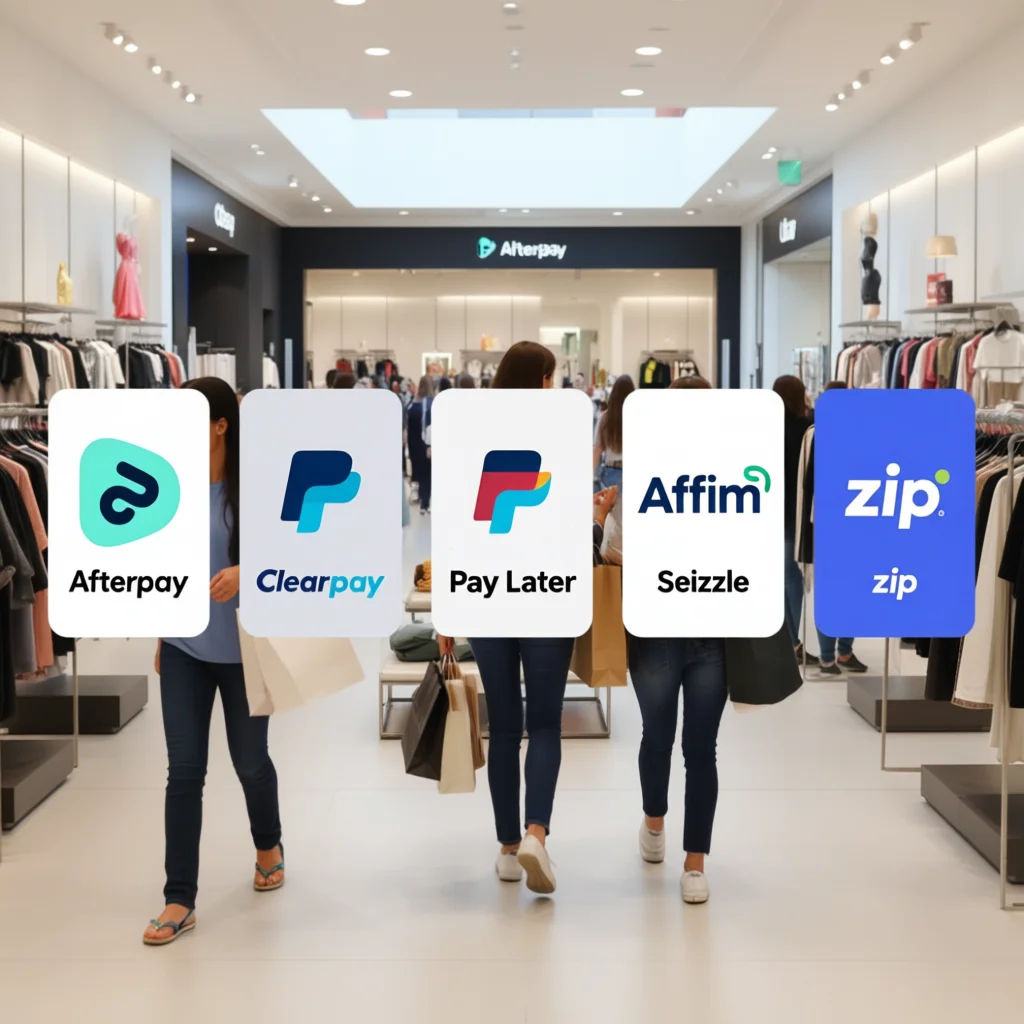
    If you like Klarna but want different fees, approvals or merchant coverage, there are several alternatives to Klarna that give you similar “buy now, pay later” flexibility. The most common picks are Afterpay/Clearpay, PayPal Pay Later, Affirm, Sezzle, Splitit, Zip and a few regionals (Zilch, Laybuy, Scalapay). These apps vary in how they split payments, credit checks, fees and where you can use them — so the “best” one depends on what you care about (no credit check, interest-free, retailer coverage).

    Below you’ll find an informal, experience-focused guide (with concrete examples and suggestions) so you can pick the right one fast.

    Why look for Klarna alternatives?

    • Maybe a merchant doesn’t accept Klarna.
    • Maybe Klarna’s late-fee policy or credit checks don’t suit you.
    • Maybe you want a provider with smaller instalments or one tied to your credit card rather than a new line of credit.

    The BNPL space changes fast, and some providers specialize by market (UK vs US vs Australia) or product (Pay-in-3 vs monthly instalments). For example, Clearpay is Klarna’s big competitor in the UK market, while Affirm and PayPal are heavier in the US.

    Top Klarna alternatives

    Niftipay

    Integrate crypto payments with ease. Accept BTC, ETH, USDT, USDC, and SOL with just 3% transaction fees and volume-based discounts.

    Afterpay / Clearpay

    • Best if you want simple, interest-free splits for fashion and lifestyle purchases.
    • Typical model: 4 interest-free payments.
    • Great merchant adoption among clothing retailers.

    PayPal Pay Later (Pay in 3 / Pay Monthly)

    • Best if you already use PayPal and value buyer protection and wide merchant acceptance.
    • Works in millions of stores where PayPal is accepted.

    Affirm

    • Best if you want transparent terms for larger purchases (electronics, furniture).
    • Offers monthly instalments, sometimes with interest — upfront clarity on total cost. Affirm has been rapidly growing market share in recent years.

    Sezzle

    • Best if you want budget-friendly, youth-oriented BNPL with flexible rescheduling policies.
    • Popular in North America for smaller purchases and apparel.

    Splitit

    • Best if you prefer using your existing credit card to split payments without new credit checks.
    • Uses the available limit on your card to create instalments — good for people who want to avoid a new BNPL account.

    Zip (formerly Quadpay), Zilch, Laybuy, Scalapay

    • Regional options with different models (pay-in-4, monthly, or card-backed instalments). Useful when shopping from specific merchants or regions.

    How these alternatives differ

    When testing BNPL apps I use the following quick checklist. These are things you’ll notice after the first order:

    1. Approval friction: Some do a soft credit check (no impact), others do full checks. If you care about credit inquiries, check each provider’s policy.
    2. Payment rhythm: Are payments split into four, three, or monthly instalments? Choose what fits your cash flow.
    3. Late-fee policy: Some charge fees; others let a missed payment trigger interest or block future purchases.
    4. Merchant coverage: Even top providers aren’t accepted everywhere — many fashion brands use Afterpay/Clearpay, while electronics may prefer Affirm.
    5. Returns & refunds flow: Returns can be slower with BNPL — you might need to wait for refund logic from both merchant and BNPL provider. (Personal note: I once had a shoe return where the refund was applied to the BNPL balance but the provider still asked me to make scheduled payments until the refund cleared — annoying but fixable.)
    6. Extra perks: Some apps offer rewards, card-linked cashback, or easier dispute resolution.

    Which alternative should you choose?

    If you shop mostly clothing & want interest-free micro-payments

    Afterpay / Clearpay is often the best match.

    If you want broad merchant coverage and buyer protection

    PayPal Pay Later — because PayPal is accepted almost everywhere and has a familiar dispute process.

    If you’re buying big-ticket items and want clear total cost upfront

    Affirm — transparent monthly plans, sometimes with promotional 0% APR for certain stores.

    If you’d rather not open a new credit line

    Splitit — uses your existing credit card, so no new line and no typical BNPL account.

    If you’re testing BNPL for the first time and want budget flexibility

    Sezzle — friendly to first-time users and often more lenient on small schedule tweaks.

    Real-world example

    Example: I ordered a €180 pair of trainers and chose a PayPal Pay in 3 option. Checkout was instant (no new sign-up), and the merchant processed shipping right away. When a sizing return was needed, PayPal automatically adjusted the balance after the merchant issued the refund — I avoided juggling two apps. That ease-of-use matters when you shop often.

    (Insert expert quote here: “BNPL success for consumers hinges on clear refund flows and transparent late-fee policies.” — consider a quote from a consumer-finance analyst or FCA official.)

    Safety tips & good habits using BNPL

    • Track payment dates in your calendar — BNPL can be easy to forget.
    • Read the T&Cs on late fees and how refunds are handled.
    • Use BNPL only for planned purchases — it’s easy to overextend.
    • Prefer providers with soft credit checks if you’re monitoring your score.
    • Check merchant acceptance before you build your cart — saves checkout friction.

    Where to find reliable comparisons and further reading

    Good, regularly updated comparison sites include industry aggregators and reviews (G2, GetApp, Finder). For market context and regulation news, follow financial outlets and regulators (market outlooks and FCA announcements).

    FAQ

    Q: Are BNPL apps bad for credit score?
    A: Many use soft checks; some do hard checks for larger loans. Check provider policy.

    Q: Is BNPL cheaper than credit cards?
    A: Not always. Interest-free instalments can be cheaper — but missed payments can become costly.

    Q: Can I cancel a BNPL payment after a return?
    A: Returns process through the merchant; refund timing depends on merchant + BNPL provider workflow.

    If Klarna works for you, stick with it. If you are looking for different terms, commercial reach, or credit behavior, try niftipay for fashion, PayPal for broad commercial coverage, for large purchases, or if you prefer installment payments by card. Each option has its advantages and disadvantages: choose based on payment schedule, fees, refund management, and merchant acceptance.