
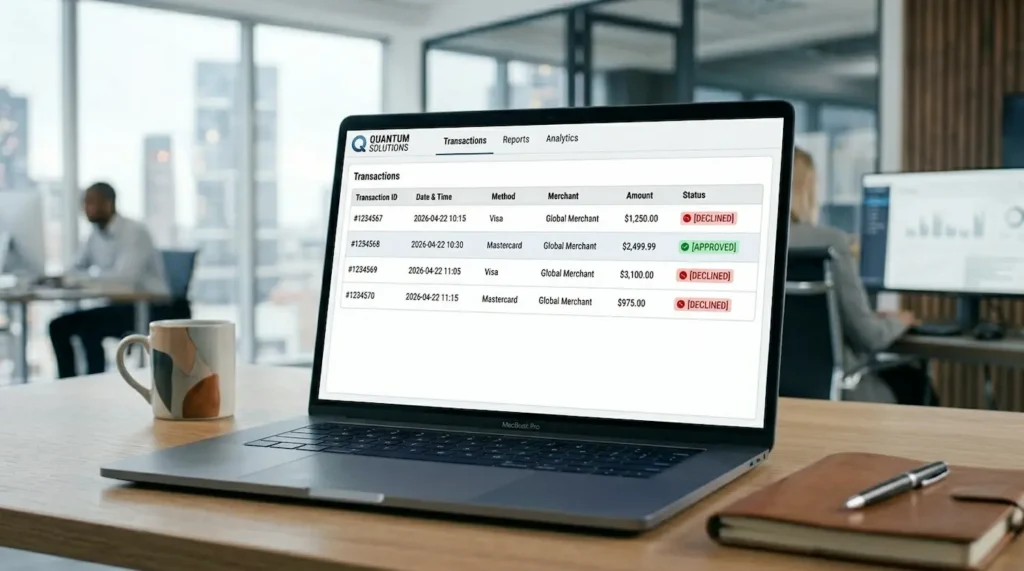
Learning how to reduce payment declines in high-risk businesses without hurting conversion is essential for online merchants in complex verticals. Declines do not just reduce revenue. They also increase customer frustration, waste acquisition spend, and create friction at the most important point in the journey: checkout.
In high-risk sectors, declines are not always caused by fraud or poor demand. They often happen because of weak routing, unclear billing, checkout friction, or a mismatch between how the business operates and how issuers or acquirers assess risk. That is why the best way to reduce payment declines in high-risk businesses is not to tighten everything blindly. It is to improve the payment setup so more legitimate transactions go through smoothly.
Why declines are more common in high-risk businesses
High-risk merchants usually face stricter scrutiny from banks and processors. That can be due to higher dispute exposure, cross-border traffic, subscription models, sensitive verticals, or more complex underwriting requirements.
As a result, even valid transactions may be reviewed or declined more often than in lower-risk sectors. The issue is not always the customer. Often, it is the payment structure behind the transaction.
Payment routing has the biggest impact
One of the most effective ways to reduce payment declines in high-risk businesses is to improve payment routing.
Not every transaction should go through the same acquiring path. Approval rates can vary depending on geography, card type, currency, and business model. A stronger routing setup helps send each payment through the most suitable path, increasing approvals without adding friction for the customer.
For many merchants, this is the fastest operational lever to improve performance.
Checkout clarity matters more than most merchants think
Declines are also influenced by how the transaction looks to both the customer and the issuer.
If the checkout flow creates confusion around pricing, billing terms, descriptors, or fulfilment, the transaction is more likely to fail. This is especially true in high-risk environments, where issuers are already more cautious.
Merchants that want to reduce payment declines in high-risk businesses should make sure the checkout experience is simple, transparent, and fully aligned with the offer shown before payment.
Better dispute control supports better approval rates
Declines and disputes are closely connected. If a business shows signs of weak post-sale management, providers and issuers are more likely to treat future transactions cautiously.
That is why stronger chargeback reduction strategies are part of the solution. Clear refund policies, accurate product descriptions, responsive support, and better customer communication all help reduce unnecessary disputes. Over time, that can also support healthier authorization performance.
This is particularly important for merchants already dealing with chargebacks in high-risk industries, where dispute patterns can affect account stability and approvals.
Recurring billing needs to be handled carefully
For subscription-based businesses, recurring billing can either improve revenue consistency or create repeated decline problems.
If billing cycles are unclear, descriptors are unrecognizable, or customers are not properly informed before rebills, recurring transactions are more likely to fail. In high-risk sectors, those issues become even more sensitive.
A clear and predictable recurring billing setup helps merchants protect both retention and approval rates.
Approval performance also depends on underwriting alignment
Another overlooked issue is what happens after payment gateway approval.
If a business starts processing in ways that differ from what was originally reviewed, such as new geographies, different ticket sizes, or a changed billing model, the provider may apply tighter controls. That can lead to more declines even when the account is technically active.
Merchants that want to reduce payment declines in high-risk businesses should keep their live operation aligned with what was approved and communicate major changes early.
Processing fees should be judged by performance, not just cost
Many merchants focus only on lowering processing fees, but price alone does not guarantee better payment performance.
In high-risk payments, fees often reflect the infrastructure, acquiring coverage, and risk management needed to maintain stable approvals. A cheaper setup can sometimes lead to weaker routing and lower authorization rates.
The smarter view is to weigh processing fees against conversion, approval quality, and long-term account stability.
A stronger payment setup protects conversion
To reduce payment declines in high-risk businesses, merchants need to improve the full payment environment, not just one metric.
That usually means:
- better routing
- clearer checkout flows
- stronger dispute prevention
- well-managed recurring billing
- closer alignment with provider expectations
When those elements work together, approval rates improve without creating more friction at checkout.
A smarter way to improve approval rates
Learning how to reduce payment declines in high-risk businesses is not just about fixing isolated issues. It is about building a payment setup that aligns with how banks, processors, and risk systems evaluate transactions.
At NiftiPay, we work with high-risk merchants to improve approval rates through better routing strategies, optimized checkout flows, and payment setups designed for complex industries.
If your business is experiencing frequent declines or inconsistent approval rates, reviewing your current setup with the right infrastructure in place can make a significant difference.
Leave a Reply